Business rent report: Are UK SMEs paying a premium for commercial rentals?

Smaller premises don't always mean cheaper rates. Here is how property type, location, and square footage impact commercial rents for UK SMEs.
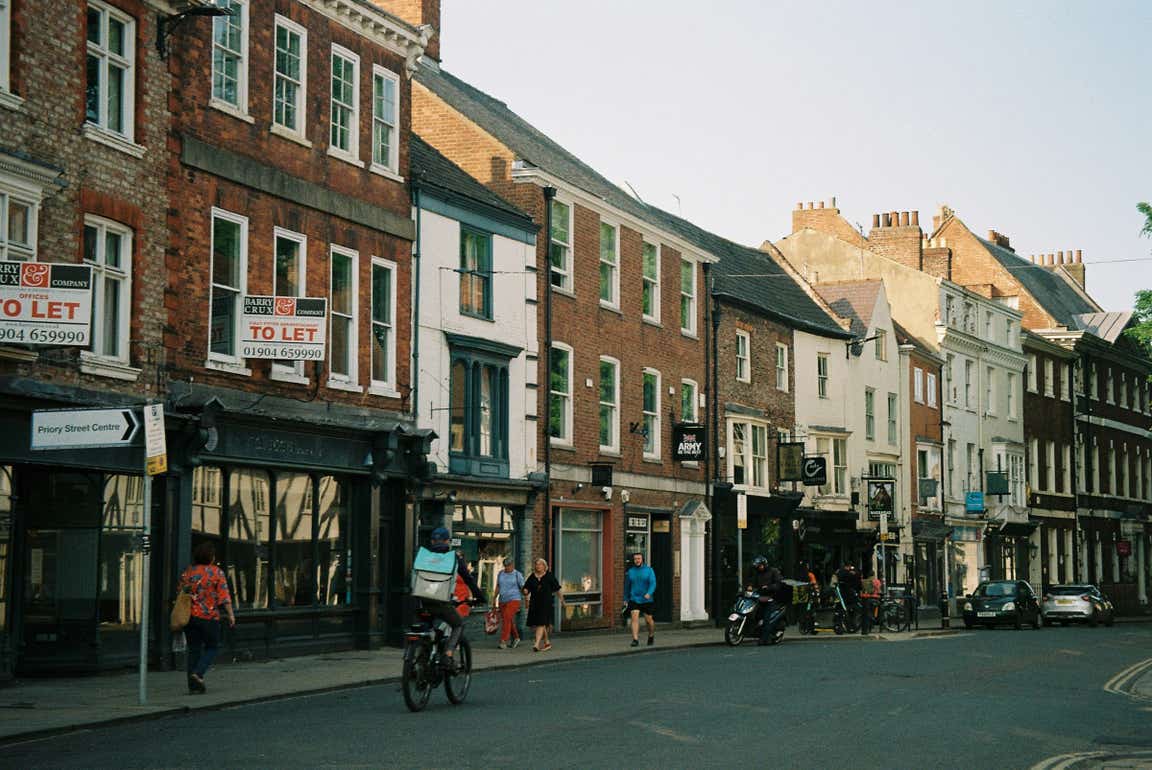
Across the UK, start-ups and small businesses are paying a steep premium per square foot to secure commercial space.
Small businesses are facing rising costs across the board, with 86.7% reporting higher business costs than a year ago. Commercial rents are adding to that pressure, with 62% of commercial property agents reporting rent increases following recent reviews.
To see what businesses are currently paying for space, money.co.uk analysed more than 4,000 commercial property listings across 18 major UK cities outside London*, comparing asking rents by property type, size and location.
Key findings from Business Rent Barometer report
Small businesses pay a size premium: Units under 500 sq ft average £58.45 per sq ft pa, nearly five times the rate for properties over 10,000 sq ft (£11.85).
Retail space demands the highest commercial rent on average: £38.74 per sq ft pa, compared with £32.32 for offices and £11.63 for industrial space.
City price premiums vary by commercial property type: Bristol is the most expensive city for offices, Brighton for retail and Birmingham for industrial space.
Nottingham is the cheapest city for a small office: 501-2,000 sq ft offices cost £13.39 per sq ft pa, the lowest among comparable cities.
Offices dominate available listings: 55.55% of all commercial properties analysed were offices.
How much more do small businesses pay for commercial space?
Across the UK, start-ups and small businesses are paying a steep premium per square foot to secure commercial space. Units under 500 sq ft average £58.45 per sq ft pa, compared with just £11.85 for properties over 10,000 sq ft - meaning businesses taking the smallest spaces pay nearly five times more for every square foot.
That premium falls quickly as businesses move into larger premises. Small units between 501-2,000 sq ft average £19.43 per sq ft, while mid-sized units fall further to £16.95. However, cheaper rates per square foot don't mean a cheaper property overall: average annual rent rises from £11,179 for a micro unit to more than £293,500 for the largest spaces.
Average UK commercial rent by property size
| Size band (sq ft) | Rent per sq ft pa | Average annual rent |
|---|---|---|
| Micro (50-500) | £58.45 | £11,178.76 |
| Small (501-2000) | £19.43 | £21,777.31 |
| Mid-sized (2001-5000) | £16.95 | £52,428.24 |
| Large 5000-10,000) | £13.10 | £89,647.80 |
| Very large/flagship (10,001+) | £11.85 | £293,482.15 |
For growing businesses, moving into a larger premises offers better value per square foot, but it also means taking on a higher overall rent bill and other upfront costs, like a deposit or new equipment.
Depending on the cost of the move, these could be covered through existing cash reserves or options such as a business loan.
Which type of commercial property is most expensive to rent?
Retail space has the highest average asking rate at £38.74 per sq ft pa, followed by offices at £32.32. Warehousing and industrial space is considerably cheaper at £11.63 per sq ft, although the much larger footprints these businesses can require still result in substantial annual rents.
Average UK commercial rent by property type and size
| Size band (sq ft) | Retail | Offices | Industrial |
|---|---|---|---|
| Overall average | £38.74 | £32.32 | £11.63 |
| Micro (<500) | £125.49 | £52.55 | £32.74 |
| Small (501-2000) | £22.96 | £19.15 | £13.86 |
| Mid-size (2001-5000) | £24.13 | £18.61 | £10.70 |
| Large (5001-10,000) | £11.71 | £19.23 | £9.65 |
| Very large (10,001+) | - | £16.60 | £8.46 |
Retail spaces demand a particularly high size premium for smaller businesses, with micro units averaging £125.49 per sq ft pa, falling to £22.96 for small units and £11.71 for large stores. Location also plays a bigger role for retailers, as businesses can face a choice between paying more for a smaller unit with better footfall or taking more space in a cheaper location.
Offices show a similar, although less extreme, pattern. Micro offices average £52.55 per sq ft pa, but that drops by 64% to £19.15 once businesses grow into the ‘small’ office bracket (501-2,000 sq ft).
Industrial and warehouse units offer the cheapest space on average at every size bracket, but smaller operators still pay a premium. A unit under 500 sq ft averages £32.74 per sq ft pa, almost four times the £8.46 paid for the largest units. The trade-off is scale, where larger warehouses offer much better value per square foot, but come with a much bigger overall rent bill.
Which UK cities are the most and least expensive for commercial rent?
There’s no single most expensive city for commercial rent, as different industries create demand for different types of space across the UK.
Where is industrial and warehouse space most and least expensive?
Birmingham is the most expensive city for industrial space, with a median rate of £12 per sq ft pa - that’s almost double Leicester's £6.81, which is the cheapest city analysed.
Recent Government research shows high demand is putting pressure on established industrial hubs, with the West Midlands and North West recording the UK's strongest industrial rental growth in 2025 at 6.2% and 6.1% respectively, mirroring the higher rents seen in Birmingham and Manchester in our analysis.
Where is office space most and least expensive?
Bristol tops the office rent cost rankings with typical rates at £30.73 per sq ft pa, almost three times Sunderland's £11.25. Brighton, Birmingham and Manchester are also among the more expensive cities to open a workplace, while Sunderland and Bradford offer some of the lowest rates for businesses with more flexibility over where they’re based.
According to LSH, businesses are increasingly competing for newer, better-equipped offices in prime locations, rather than simply taking any available space. Grade A offices accounted for 58% of regional office take-up in early 2026, while the very best prime-quality space attracted a quarter of take-up despite making up just 7% of available stock. With relatively few of these offices available, competition for the best space is helping to drive prime rents higher.
For small businesses though, the picture changes when looking specifically at offices between 501 and 2,000 sq ft. Brighton becomes the most expensive office area at £24.36 per sq ft pa, while Nottingham offers the cheapest at £13.39 - around 45% less. Liverpool (£13.42), Glasgow (£14) and Sheffield and Leeds (both around £15) also offer some of the lowest rates for smaller offices.
Where are retail units most and least expensive?
Brighton demands the highest median retail rent at £25.54 per sq ft pa, followed by Cardiff (£21.44) and Leeds (£21.22), while Bradford offers the cheapest space for retailers at £14.02 - 45% less than the most expensive city.
Differences in footfall, local demand and the amount of retail space available all influence price gaps between cities.
Centre for Cities found that Bradford loses nearly 5% of its high-street spending to neighbouring Leeds, giving retailers more reason to compete for space in Leeds and supporting higher rents there. Meanwhile, Brighton has relatively little retail space for the number of shoppers it attracts, along with a vacancy rate below 10%, creating similar competition for available units.
Commercial rent by UK city and property type (median sq ft pa)
| City | Retail | Office | Industrial |
|---|---|---|---|
| Birmingham | £19.14 | £24.84 | £12.00 |
| Bradford | £14.02 | £12.20 | £8.50 |
| Brighton | £25.54 | £27.30 | – |
| Bristol | £20.44 | £30.73 | £11.50 |
| Cardiff | £21.44 | £20.50 | £7.83 |
| Coventry | – | £19.42 | £10.02 |
| Doncaster | £16.37 | £14.08 | £8.08 |
| Edinburgh | – | £22.00 | – |
| Glasgow | £20.91 | £15.83 | £9.20 |
| Leeds | £21.22 | £20.00 | £9.67 |
| Leicester | – | £14.72 | £6.81 |
| Liverpool | £16.85 | £19.02 | £10.28 |
| Manchester | £17.99 | £24.17 | £11.17 |
| Milton Keynes | – | £22.50 | £11.54 |
| Newcastle | £16.63 | £17.69 | £8.11 |
| Nottingham | £17.46 | £17.40 | £8.70 |
| Sheffield | – | £16.30 | £8.39 |
| Sunderland | – | £11.25 | – |
“–” indicates the city/property category did not meet the minimum sample threshold.
Which commercial property type has the most available listings?
Offices dominate the commercial property listings analysed, accounting for 57.55% of the total, compared with 25.57% for warehousing and industrial units, and 16.88% for retail.
The large choice of office units might give businesses searching for workspaces more room to negotiate on leases, with landlords in some markets offering incentives like rent-free periods to attract and retain occupiers.
Share of available commercial property, by type
| Property type | Share of listings (%) |
|---|---|
| Offices | 57.55% |
| Warehousing and industrial | 25.57% |
| Retail | 16.88% |
How can businesses manage the cost of commercial rent?
Businesses get paid in very different ways, so whether the rent looks affordable on paper is only part of the picture. A shop might have money coming in every day but rely on seasonal boosts, while a consultancy could wait weeks for an invoice to be paid, making some months tighter than others. Also, if businesses rely on a small number of large contracts they could see big swings in income, so it’s worth looking at when money actually comes in before committing to a fixed monthly cost.
The rent itself also needs to be affordable alongside the other costs of running the premises, from business rates to energy bills. Keeping a cash reserve can make it easier to manage periods with lower cash flow, while money that isn’t needed straight away could be held in a business savings account where it can earn interest. A business loan could also help manage cash flow when income is less consistent, or cover some of the cost of moving into a larger space without using up that reserve.
Methodology
money.co.uk collected 3974 live commercial property listings from Zoopla to compare current asking rents across 18 major UK cities outside London, selected by population size. The analysis covers offices, retail and industrial properties, recording each listing's annual asking rent, size, location and property type.
Listings under 50 sq ft were excluded, along with any city, property type or size band with fewer than 25 listings. Properties were grouped into five size bands: 50-500 sq ft, 501-2,000 sq ft, 2,001-5,000 sq ft, 5,001-10,000 sq ft and 10,001+ sq ft. City-level figures use the median, while UK-wide figures use the mean.
*London was excluded to allow for a more meaningful comparison between major regional UK cities. Its significantly larger commercial property market, greater volume of listings and typically higher rents make it harder to identify differences between regional markets.
Full commercial rental data by UK city, property type, and size, is available upon request.
About Joe Phelan
Joe is an experienced writer, journalist and editor. He has written for the BBC, National Geographic, and the Observer. As a business expert, his work frequently spotlights the ventures and achievements of small business owners. He writes a weekly insight article for money.co.uk, published every Tuesday.
View Joe Phelan's full biography here or learn more about our editorial policy