Meet Jaye: the co-founder and CTO rethinking identity verification

Jaye Hackett co-founded Vouchsafe to help people prove who they are, even if they don’t have a passport or driving licence.
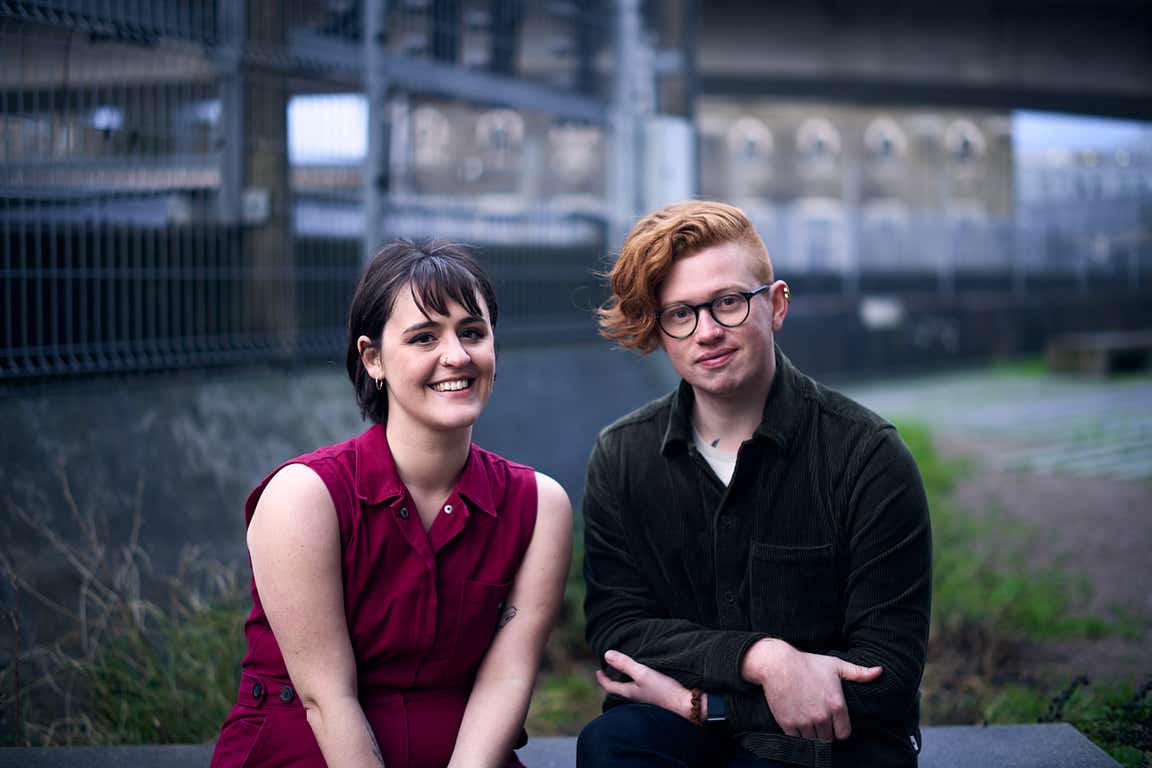
Frustrated by the restrictive nature of traditional ID systems, Jaye Hackett (right) and co-founder Chloe Coleman (left) decided to build a more inclusive way for people to prove their identity.
Business name: Vouchsafe
Industry: Identity verification
Founded: 2022 (approximate)
Top business product(s): Business banking and business savings
Key learning: “There have never been fewer barriers to testing an idea in the real world and getting feedback from real customers.”
Jaye Hackett’s fascination with technology and social impact led them from the civil service into launching Vouchsafe, a London-based startup tackling ID poverty, alongside co-founder Chloe Coleman.
Many people in the UK struggle to access essential services because they don’t have a passport or driving licence. Vouchsafe changes that. The platform helps people prove who they are through trusted relationships, digital evidence, or documents, all while keeping security and fraud prevention front and centre.
Here’s how co-founders Jaye Hackett and Chloe Colman are making identity verification more inclusive and why it matters.
For anyone unfamiliar with Vouchsafe, how would you explain what the business does and the problem it exists to solve?
Vouchsafe helps businesses trust their customers more, and vice versa, by accepting digital ID. It’ll be a long time before everyone can use digital ID, so we are alone in offering inclusive fallbacks for those without it. The most important is a “vouch” from a trusted referee, which is really important for the 11 million people in the UK who don’t have a passport or driving licence.
What were the moments in your previous work that made it clear the current systems for proving identity weren’t working for everyone?
Chloe led user research on Universal Credit for two years, including during the coronavirus pandemic. She saw hundreds of people struggling to prove who they were and falling victim to systems that were never designed properly.
What’s something you’ve learned about yourselves as business owners that you perhaps didn’t expect when you started?
We both started our careers in the civil service. We did everything in the safety and conservative culture of a large bureaucracy. There were many layers isolating us from the effects of our decisions. In a startup, you can’t depend on any of that. Clients judge you by how much they like you as a person as well as how well your product solves their problem.
What have you found most challenging about building a business that people and organisations need to trust?
One of the biggest challenges has been building a business that people and organisations can truly trust. It means showing that our technology works, and also that our intentions are ethical.
What kinds of organisations benefit most from using Vouchsafe, and what challenges are they typically trying to overcome?
We’ve had very good traction with credit unions and other kinds of ethical lenders. People’s finances used to be able to weather unexpected hassles like a broken boiler or stolen bicycle, but the rising cost of living means people now rely heavily on credit. We help all sorts of financial services broaden the profile of customer they can offer products to, and cut the risk of accepting made-up or stolen identities.
What financial products or services have supported the business’ growth and operations?
We do our everyday banking with Monzo and Allica for our savings. We’ve been lucky enough to avoid relying on credit cards or debt financing to get going.
What advice would you give to other small business owners trying to build something meaningful as well as commercially viable?
We both went into this with a distaste for sales, mainly due to stereotypes of pushy salespeople making you buy things you don’t need. But we’ve both fallen in love with what sales really is: having deep conversations with customers about their problems and trying really hard to solve them.
The days of starting and funding a company with just an idea are gone. There have never been fewer barriers to testing an idea in the real world and getting feedback from real customers before deciding to take the next step.
What’s next for Vouchsafe, and how do you see the role of digital identity evolving in the coming years?
The government’s decision not to make digital ID mandatory will ironically lead to it happening sooner than they planned. UK mobile driving licences are coming later in 2026, and the EU digital wallet deadline will push every member state to issue their own digital ID and wallet by December.
This time next year [2027], a majority of Brits will have at least one digital ID they can use and understand. Once that happens, we can expect banks and other everyday services to quickly default to asking for them instead of the current system of passport photos and utility bills. They’re faster and easier to provide, and much safer for everyone involved, so why not? Vouchsafe is already helping our customers make that change.
About Joe Phelan
Joe is an experienced writer, journalist and editor. He has written for the BBC, National Geographic, and the Observer. As a business expert, his work frequently spotlights the ventures and achievements of small business owners. He writes a weekly insight article for money.co.uk, published every Tuesday.
View Joe Phelan's full biography here (opens in a new tab) or learn more about our editorial policy (opens in a new tab)