Meet Sara: the founder who championed plus-size representation in activewear before the industry caught up

Sara Hanna founded TLC Sport after struggling to find comfortable, confidence-boosting workout wear. Now, alongside daughter Charlotte Ayoub, she runs an ethical, size-inclusive label trusted by women across generations.
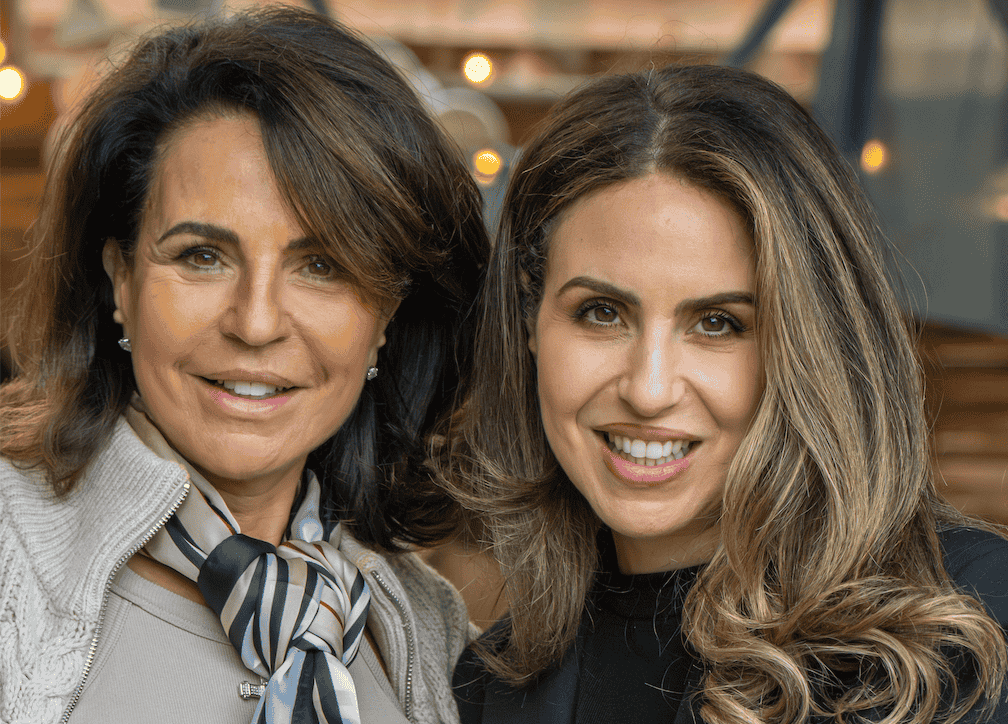
Sara Hanna (left) and Charlotte Ayoub (right) have built a business on the foundational values of comfort, inclusivity and ethical manufacturing.
Business name: TLC Sport
Industry: Activewear
Founded in: 1984
Top business product: Business insurance
Key learning: “Long-lasting products and long-standing relationships are what make our values commercially sustainable.”
Building a fashion brand is something Sara Hanna did out of necessity.
Teaching aerobics classes in Cairo in the early 1980s, she simply couldn’t find workout clothes that fit well, felt good, and actually supported women’s bodies. So she started making her own leotards to wear in class.
Word quickly spread. Her students wanted them too, and what began as a practical solution quickly evolved into The Leotard Company, now known simply as TLC Sport.
Over four decades, TLC Sport has grown into a family-run brand built on comfort, inclusivity and ethical manufacturing; values it championed long before they became fashionable.
Today, Sara runs the business alongside her daughter, managing director Charlotte Ayoub, continuing a mission to help women feel confident in their bodies, whatever their size or stage of life.
Here’s how they’ve built a purpose-driven brand that’s standing the test of time.
The brand began from a very practical need while teaching aerobics. How did those early, hands-on beginnings shape the way the business still operates today?
From the very beginning, TLC Sport was built on solving real problems for real women. That hands-on experience still shapes everything we do today. I remain closely involved in designing the ranges. It’s my favourite part of the business because creating garments that genuinely add value to someone’s life has always been at the heart of the brand. That practical, user-first mindset continues to guide how we design, develop and refine every product.
When the second generation joined the business in 2012, what felt like the biggest opportunity, and what needed to change to support the next phase of growth?
This was absolutely crucial for the company’s growth and longevity. It wasn’t just about having a fresh perspective, but a younger outlook and different way of thinking. This period marked a significant evolution for TLC Sport, from revamping the website and refreshing the branding, to introducing systems and streamlining operations. These were areas I openly acknowledge weren’t my strengths, but they were essential foundations for scaling the business in a more modern, efficient way.
The decision to feature plus-size models came long before body positivity was widely discussed. How did that choice influence the brand and its relationship with customers?
This decision was rooted deeply in my core values. Our customers simply couldn’t relate to the very thin, unrealistic models that dominated the industry throughout the 1990s. Despite resistance from photographers and stylists at the time, I knew representation mattered.
By the early 2000s, I made a conscious decision to change our casting approach, even flying a model over from New York because plus-size models were virtually unavailable in the UK. That commitment helped strengthen trust with our customers and reinforced TLC Sport as a brand that genuinely understood and respected women’s bodies.
Running a business together as a family brings a unique dynamic. How do you balance personal relationships with leadership and decision-making at work?
Charlotte and I have very distinct roles, with skill sets that complement each other rather than overlap. That clarity makes decision-making much easier. Like many women-led businesses, work and family life naturally intersect, especially now that Charlotte is married and has a young child. Rather than trying to separate the two rigidly, we prioritise what matters most at any given time and support each other accordingly. It’s a dynamic that works for us.
What financial products or services have supported the business’ growth and operations?
Having business insurance gives us peace of mind because we know we’re protected against unexpected challenges. Combined with our decision to grow entirely organically, it means we can take calculated risks without compromising our principles.
We haven’t relied on external finance, which allows us to make decisions aligned with our values, invest in quality and focus on building long-term relationships with our customers and suppliers. These choices give us both security and freedom to run TLC Sport the way we believe it should be run.
Ethical manufacturing and sustainability sit at the heart of the brand, but they also add complexity. How do you make those values work commercially in a competitive market?
Sustainability has always been integral to TLC Sport. It isn’t a trend we’ve adopted, but a principle we were founded on. Our garments are made to last because we invest in high-quality materials and maintain complete oversight of the manufacturing process.
Many of our team members have been with us for years. They’re part of the family, and that continuity reflects the care and pride that goes into everything we produce. Long-lasting products and long-standing relationships are what make our values commercially sustainable.
After four decades, what does success look like for TLC Sport today, and what do you hope the business continues to stand for in the years ahead?
Success has evolved so much over the years that I’m not always sure how to define it anymore! What I do know is that TLC Sport has always stood for integrity, inclusivity and creating clothing that truly supports women and I hope that remains unchanged for generations to come.
Charlotte likes to keep it simple: success at TLC has always been, and still is, happy customers.
About Joe Phelan
Joe is an experienced writer, journalist and editor. He has written for the BBC, National Geographic, and the Observer. As a business expert, his work frequently spotlights the ventures and achievements of small business owners. He writes a weekly insight article for money.co.uk, published every Tuesday.
View Joe Phelan's full biography here or learn more about our editorial policy