Meet Huib: the founder creating energy drinks inspired by the Sherpas of Everest

Huib van Bockel created Tenzing after discovering Himalayan teas used by Sherpas to fuel high-altitude climbs, seeing a natural alternative to conventional energy drinks.
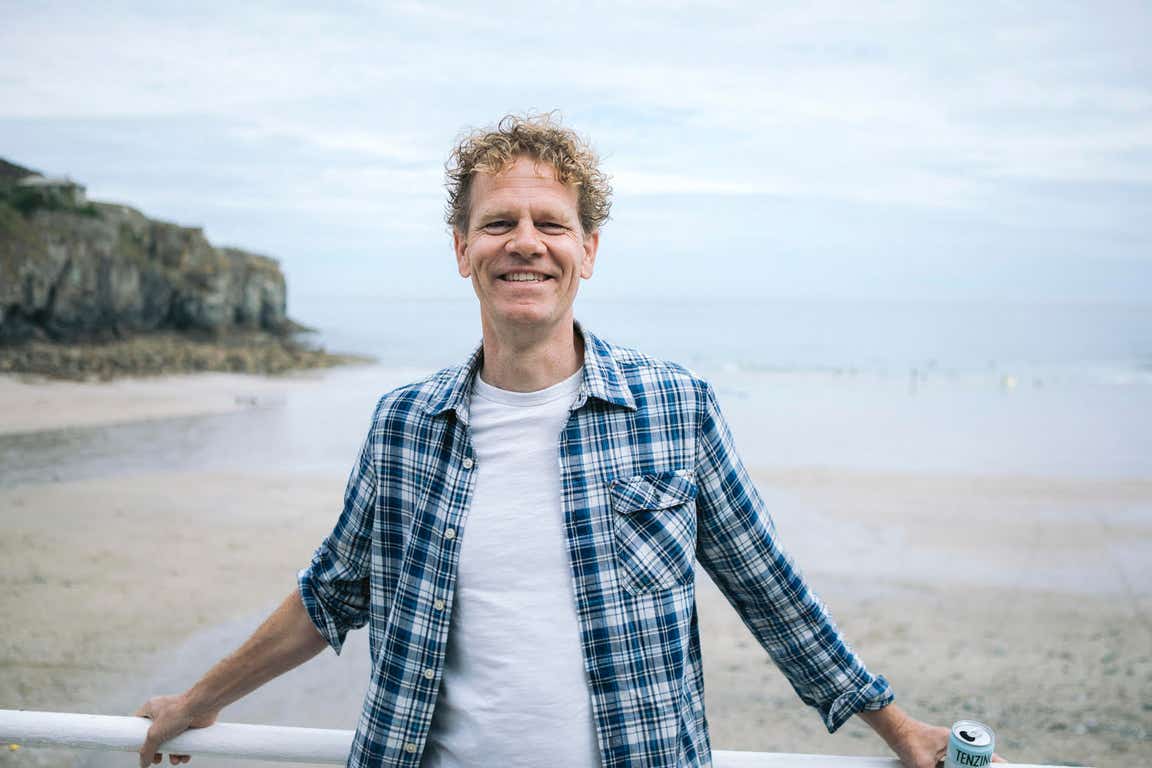
Inspired by Sherpa Tenzing Norgay and Himalayan tea recipes, Huib has built a plant-based energy drink that delivers a low-calorie boost without artificial ingredients or sugar crashes.
Business name: Tenzing
Industry: Energy drinks
Founded in: 2016
Top business product: Business bank account
Key learning: “Be clear about what you stand for, and stick to it.”
When Huib van Bockel started Tenzing, he wanted to prove that energy drinks could be effective and enjoyable without relying on sugar or artificial ingredients. Inspired by the traditional teas used by Sherpas to power high-altitude expeditions, Huib set out to create a plant-based, low-calorie energy drink that could fuel both body and mind.
During his research, Huib met the descendants of Sherpa Tenzing Norgay, the legendary mountaineer who, alongside Sir Edmund Hillary, was one of the first two people to reach the summit of Mount Everest. His teamwork, respect for nature, and ambition became the guiding principles of the brand. Every ingredient in Tenzing comes from nature, carefully sourced to deliver performance without the crash associated with conventional energy drinks.
The brand is B Corp certified, tracks its carbon footprint, and reinvests in environmental projects, showing that energy drinks can be both effective and responsibly made.
Here, Huib shares how Tenzing carved out space in a crowded category, the challenges of building a challenger brand, and the tools that have supported its growth.
What inspired you to start Tenzing, and what does the name represent?
When I was young, my dad would often tell me about the story of Sherpa Tenzing Norgay and Sir Edmund Hillary reaching the summit of Everest. It wasn’t just about the achievement, but about how Tenzing did it: climbing as a team, respecting the mountain, and relying on natural, simple sources of fuel.
Years later, after eight years at Red Bull as Head of Marketing for the UK and Europe, I started thinking there must be a better way to make an energy drink; one that was natural, low in calories, and free from artificial ingredients. That’s when I remembered the Sherpa story.
I wanted to understand what powered Tenzing on Everest. In Nepal, I met his family and began experimenting with some of the ingredients he used, which are still used by Sherpas today: natural caffeine from teas, electrolytes from Himalayan rock salt, and antioxidants from fruits and lemon teas. This became Tenzing: a plant-based energy drink inspired by the spirit and endurance of Sherpa Tenzing, with his family joining as partners in the business.
The energy drinks market is crowded. Why did you think there was room for Tenzing?
The energy drinks market is crowded, but I saw an opportunity. People still want energy, but most drinks rely on sugar, artificial ingredients, and the crash that comes with them. I knew it could be done differently.
From the start, Tenzing focused on ingredients people could trust. The response was immediate. Among climbers, students, and other adventurous communities, Tenzing quickly became one of the fastest-growing energy drinks in the UK.
What were the biggest challenges bringing Tenzing to market?
The biggest challenge was convincing people that a natural energy drink could actually deliver. At the time, the market expected energy to come from sugar and chemicals, so early on we had to prove there was another way. Getting retailers and consumers to take a chance on a new category wasn’t easy, but once people tried it, they kept coming back. That early proof of repeat purchase was critical for building momentum.
What does “natural energy” mean to you?
It’s about getting a real boost without compromising your body or your focus. It’s energy that comes from plants, not chemicals, something you can rely on to keep going without the crash or jitters that some traditional energy drinks give.
For us, natural energy isn’t just about what’s in the can – it’s about how it works. It’s rare to see a drink this clean in the energy drinks category, and that philosophy guides everything we do: no shortcuts, no artificial boosts, just energy that comes from nature.
Looking back, what would you do differently?
I’d probably have trusted our vision more from the start. As a small challenger brand, people constantly suggested we compromise. We never did, but early on we sometimes talked in the language of the old category instead of confidently defining our own. The lesson is simple: if you’re trying to change an industry, clarity matters. Be clear about what you stand for, and stick to it.
What financial tools have supported Tenzing’s growth?
Like most young businesses, strong banking, supportive investors, and good retail partners have been essential. Managing cash flow is critical in a consumer goods business, especially when you’re scaling production and distribution. But, ultimately, the biggest driver of growth has been building a brand people genuinely believe in.
How do you balance sustainability with commercial growth?
For us, sustainability isn’t an add-on, it’s part of how we run the business. From the start, we’ve tried to do things the right way: sourcing ingredients responsibly, tracking our carbon footprint, and making sure every can reflects the impact it has on the planet.
Being a B Corp and using carbon labels keeps us honest. It’s not just about meeting a standard; it pushes us to constantly reduce our impact as we grow, so we can scale the brand without compromising our values.
What’s the ultimate ambition for Tenzing?
Our ultimate ambition is simple: to show that energy drinks don’t have to rely on artificial ingredients or gimmicks. We want Tenzing to set a new standard and prove that natural, plant-based energy can compete in a big market. If we can shift even a small part of the category in that direction, it’ll feel like we’ve done something worthwhile.
About Joe Phelan
Joe is an experienced writer, journalist and editor. He has written for the BBC, National Geographic, and the Observer. As a business expert, his work frequently spotlights the ventures and achievements of small business owners. He writes a weekly insight article for money.co.uk, published every Tuesday.
View Joe Phelan's full biography here (opens in a new tab) or learn more about our editorial policy (opens in a new tab)