Meet Gaya: the self-taught baker who turned a side hustle into a Putney patisserie

From bespoke cakes made after work to a neighbourhood shop built on flavour, design and loyal customers, Gaya Vara has grown her creative outlet into a full-time hospitality business.
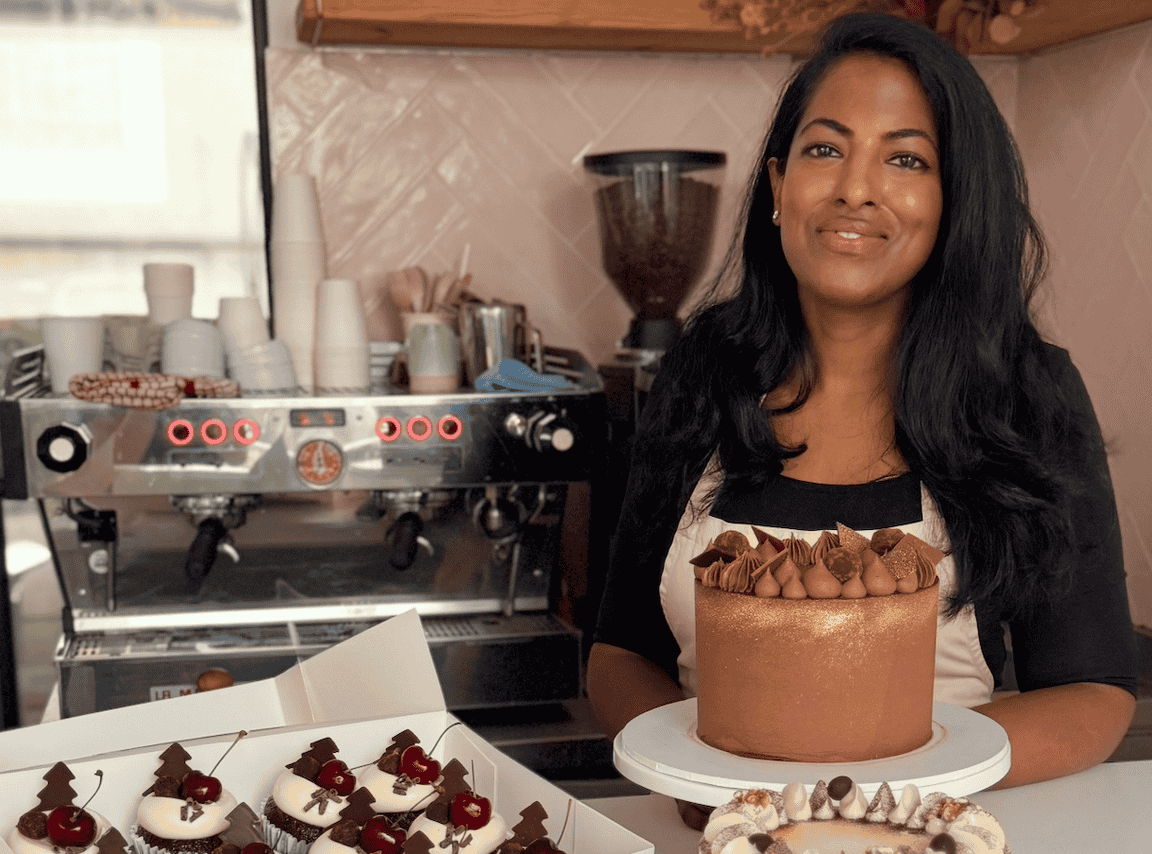
Years of self-teaching and word-of-mouth demand helped Gaya Bakery grow from home kitchen experiments into a thriving bricks-and-mortar outlet.
Business name: Gaya Bakery
Industry: Hospitality
Founded in: 2012 (Putney location opened 2021)
Top business product: Business bank account
Key learning: “If the demand is there, and you’re genuinely excited by the challenge, that’s usually a good sign it’s the right time to take the step.”
Self-taught baker Gaya Vara built her reputation one bespoke cake at a time. While working in finance, she spent evenings experimenting with recipes, developing a style shaped by her love of art, design and exceptional quality.
Those early commissions became a steady stream of enquiries, helped by an online presence that showcased her eye-catching work. With growing demand and a loyal customer base, Gaya made the leap into a full-time business and opened her Putney bakery, giving customers the chance to experience her cakes up close.
Gaya Bakery now combines carefully developed recipes with bold, elegant design, producing celebration cakes and patisserie made from scratch in small batches.
You started Gaya Bakery as a creative outlet alongside a career in finance. What gave you the confidence to turn that side project into a full-time business?
In the early days it was very much a passion project. I was working full-time in finance, and baking gave me a creative outlet and a sense of balance. What gave me the confidence to take it further was the response from customers. Orders started coming in consistently and there was real excitement around the products. At a certain point, it stopped feeling like a hobby, and started looking like a business with genuine potential.
I knew that if I wanted to see how far it could go, I needed to give it my full attention. It was a leap of faith, but a calculated one.
How did selling online in the early days help you test demand, build a customer base, and grow before committing to a physical space?
At the beginning the focus was on bespoke cakes rather than online retail. The website acted more as a portfolio, a place for potential clients to see our work and make enquiries, and most orders came through direct conversations. That helped build a reputation and a loyal customer base organically.
Each fresh order generated word-of-mouth recommendations, repeat clients, and a steady flow of new enquiries. The e-commerce side came much later, alongside the physical shop. It was introduced so customers could pre-order in-store products and get celebration cakes more conveniently. By then, the online platform wasn’t about testing demand; it was about supporting and scaling a business that already had strong foundations.
Opening a bricks-and-mortar bakery brings a very different set of pressures. What were the biggest adjustments you had to make when you opened your shop in Putney?
One of the biggest challenges was simply making people aware of our existence. We aren’t located directly on the high street so we can’t rely on natural footfall. As a result, we’ve had to invest a lot of time and energy into social media and digital marketing to let people know we’re there.
It was also a big shift operationally. With an online or bespoke-only model you can manage production around orders. A physical shop brings fixed opening hours, higher overheads, staffing, and the need to have the right products available every day. It meant having more structured planning, clearer processes and a strong focus on consistency. But over time, as more customers discovered us and started returning regularly, the effort paid off.
From a business point of view, what does a physical shop allow you to do that an online store can’t?
There’s a distinct charm in customers stepping through our doors, seeing the cakes up close, breathing in the aromas of freshly-baked pastries, and connecting with us in person. It’s an experience no online platform will ever be able to replace.
As the business has grown, how have your priorities as an owner changed?
When I started out most of my time was spent in the kitchen, developing recipes, refining designs and making sure every order met a high standard. The focus was on creativity and product quality. As we’ve grown, my role has shifted. I spend far less time in the kitchen and much more time working on the bigger picture, growing the e-commerce side, planning marketing activity, and focusing on social media and brand visibility.
Operations, cash flow, and customer experience have also become much bigger priorities. Creativity’s still at the heart of the brand, but it now sits alongside strategic decisions that help the business grow sustainably.
You now offer Buy Now Pay Later at checkout. What prompted that decision?
We partnered with Clearpay last year, and it felt like a natural fit for our online business. Our products range from £18 brownies to £145 celebration cakes as well as bespoke creations for special occasions. They’re luxuries, and we recognise many customers are being more mindful of their spending.
By offering Clearpay we’re allowing them to enjoy our products while spreading the cost in a way that suits people’s budgets. What’s been particularly interesting is how widely this option is used across all types of customers, which seems to reflect the growing demand for flexibility in how people choose to pay.
What financial products or services have supported the business’ growth?
The business has been entirely self-funded. In the early stages that meant being very careful with spending, reinvesting profits back into the business, and growing at a pace that felt sustainable.
Having a dedicated business bank account and the right payment systems in place has been important from an operational perspective, but we haven’t relied on external loans or investment.
Being self-funded has given us a lot of control over how the business develops. It’s allowed us to make decisions based on long-term brand values rather than short-term financial pressures, and to grow in a way that feels measured and manageable.
For anyone running a side hustle while working full time, what lessons would you share about knowing when and how to take it full-time?
It wasn’t about one particularly busy week or a sudden spike in orders, but a steady stream of enquiries and repeat customers over time. That consistency gave me the confidence that the business had real potential.
It’s also important to prepare as much as you can financially before making the leap. Being self-funded meant I had to be realistic about costs, build some savings, and grow at a pace the business could support. Having that buffer makes the transition far less stressful.
Finally, be honest with yourself about what the change will involve. Turning a passion into a full-time business is incredibly rewarding, but it also comes with long hours and a lot of responsibility. If the demand is there, and you’re genuinely excited by the challenge, that’s usually a good sign it’s the right time to take the step
About Joe Phelan
Joe is an experienced writer, journalist and editor. He has written for the BBC, National Geographic, and the Observer. As a business expert, his work frequently spotlights the ventures and achievements of small business owners. He writes a weekly insight article for money.co.uk, published every Tuesday.
View Joe Phelan's full biography here (opens in a new tab) or learn more about our editorial policy (opens in a new tab)