Meet Ella: the founder turning dark chocolate into a flavour-packed, ethical indulgence

Ella McKay co-founded FATSO during lockdown to shake up the dark chocolate category with bold flavours and uncompromising ethics.
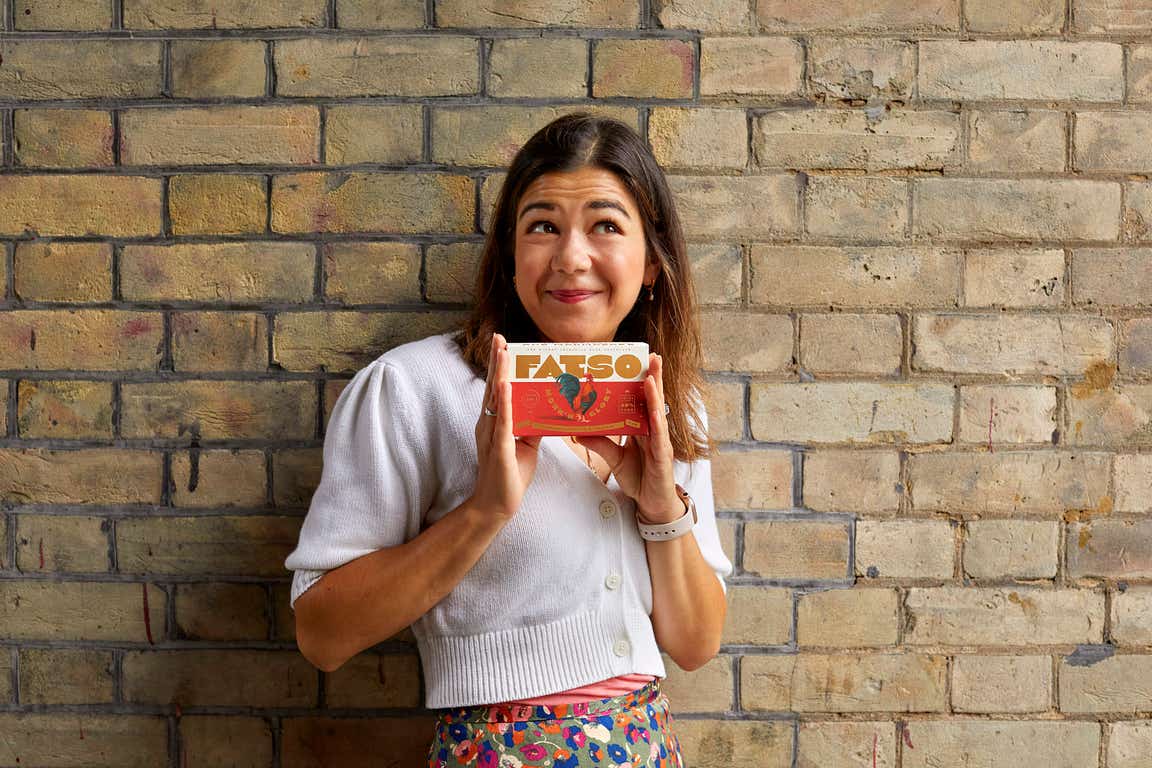
Ella creates dark chocolate that is ethically produced, sustainably sourced, and delicious.
Business name: FATSO
Industry: Premium chocolate
Founded in: 2022
Top business products: Business banking, business credit card and business savings
Key learning: “By making quality non-negotiable, you safeguard long-term, sustainable growth.”
FATSO was born in lockdown, when Ella McKay and her co-founders decided dark chocolate deserved a rethink. Boring, serious, uninspiring – that’s what they felt the category had become.
And so they set out to create chunky, flavour-packed bars made with the finest Colombian dark chocolate, while putting ethics and quality at the heart of the business.
From sourcing through the purpose-led Luker Chocolate in Colombia to partnering with skilled chocolatiers, FATSO has built a short, transparent supply chain that values farmers as true partners.
Every bar is crafted to deliver bold flavour, consistency, and sustainability, from climate-positive chocolate production to FSC-certified, renewable-ink packaging.
Now stocked in premium retailers including Liberty, Jarrold, Fenwick, and Waitrose, FATSO is proof that, when you’ve built a product the right way, you’ll never need to compromise on taste, ethics, or quality to scale.
FATSO started during lockdown. What made you decide to turn the idea into a business?
I’ve always had entrepreneurial instincts, from selling cakes outside my house in Camden when I was seven, to finding ways to grow and evolve in the corporate world. I was working for a small soap business when the idea for FATSO came about, and that experience gave me the confidence to go all-in when the timing felt right.
Why did you think dark chocolate needed shaking up?
Dark chocolate was boring: something people felt they should eat rather than wanted to. In a category full of innovation, all the exciting flavours and formats were happening in milk and high-sugar chocolate. Meanwhile, dark chocolate was the unsung hero. We saw an opportunity to inject personality, creativity, and bold flavour into a part of the shelf that had huge potential to elevate the quality and future of the category.
What’s something about launching a food brand that you didn’t understand until you were doing it yourself?
Blimey – so many things! But the biggest eye-opener has been the supply chain. Even under normal circumstances, it’s complex and nuanced, but when you want ethics and integrity at the heart of your business, you can’t simply consolidate through wholesale. We take full responsibility for our supply chain, tracing every component to its source, building relationships, and connecting all the dots ourselves.
Chocolate is a crowded and competitive category. What’s been the hardest part of getting FATSO onto shelves and into customers’ hands?
I don’t really see it as “hard” – it’s about persistence. We didn’t start by pitching to big retailers with already crowded shelves. Instead, we began small, proving there was an appetite for our brand. By working with independent retailers who champion small brands and offer shoppers a sense of discovery and differentiation, we’ve been able to grow FATSO and share it with the right customers.
What trade-offs have you had to make to keep your sourcing standards high while still keeping FATSO competitive on price/scale?
We don’t do trade-offs. We believe that if people understand our story and standards, they’ll happily pay a little more. We’re building a fundamentally good chocolate brand, inside and out. Many brands in the category compromise on quality, taste, or ethics to protect margins and volume, but that approach ultimately frustrates consumers and pushes them to change their habits anyway; to buy better, but perhaps less frequently. And we welcome that. By making quality non-negotiable, you safeguard long-term, sustainable growth and profit because you’re protecting your most important asset: your customer base.
Was there a particular moment when you realised FATSO had real momentum?
We’ve had plenty of those moments over the past three years: hitting financial targets, growing our team, and securing premium retail wins with Liberty, Jarrold, and Fenwick. The most recent milestone is our debut, exclusive listing in Waitrose. This cements FATSO’s position as a premium, quality-driven chocolate brand and makes our bars more accessible to the customers who love good food, and truly good chocolate.
What financial products or services have supported FATSO’s growth and operations?
Our focus has been on building a sustainable business authentically. The first three years were all about proving that FATSO could grow and sustain itself through sales. We bank with HSBC, use a credit card for everyday expenses, maintain a small overdraft facility when needed, and have a deposit account for savings. Thanks to strong relationships and demonstrated sales growth, we’ve also secured favourable credit terms with our major suppliers.
Looking back, what’s one decision you’d change if you were starting FATSO again?
I wouldn’t change a thing. Every decision we’ve made has been a learning experience, and we wouldn’t be the business we are today if we’d done anything differently.
What advice would you give someone launching a food brand today?
Be brave, stay persistent, and trust yourself. Surround yourself with a supportive business community, for example, Buy Women Built or the NatWest Accelerator. And above all, enjoy the ride!
What’s next for FATSO, and how do you grow the brand without losing the personality and quality that makes it stand out today?
We have some exciting retail launches coming up that will significantly expand our distribution and market presence. I’m also honoured to be part of the Goldman Sachs 10,000 Small Businesses UK programme, working on our growth strategy, so let’s revisit this question in a few months. What I can say is this: we will grow without compromising on quality, ethics, or the personality that makes FATSO unique. Period.
About Joe Phelan
Joe is an experienced writer, journalist and editor. He has written for the BBC, National Geographic, and the Observer. As a business expert, his work frequently spotlights the ventures and achievements of small business owners. He writes a weekly insight article for money.co.uk, published every Tuesday.
View Joe Phelan's full biography here or learn more about our editorial policy