- >
- Business>
- Business case studies>
- Meet Matt: the restaurateur who is reinventing the pickle
Meet Matt: the restaurateur who is reinventing the pickle

Matt Harris launched Pickle Project to create the UK’s first ultrasonic pickles after struggling to find any good enough for his fried chicken restaurants.
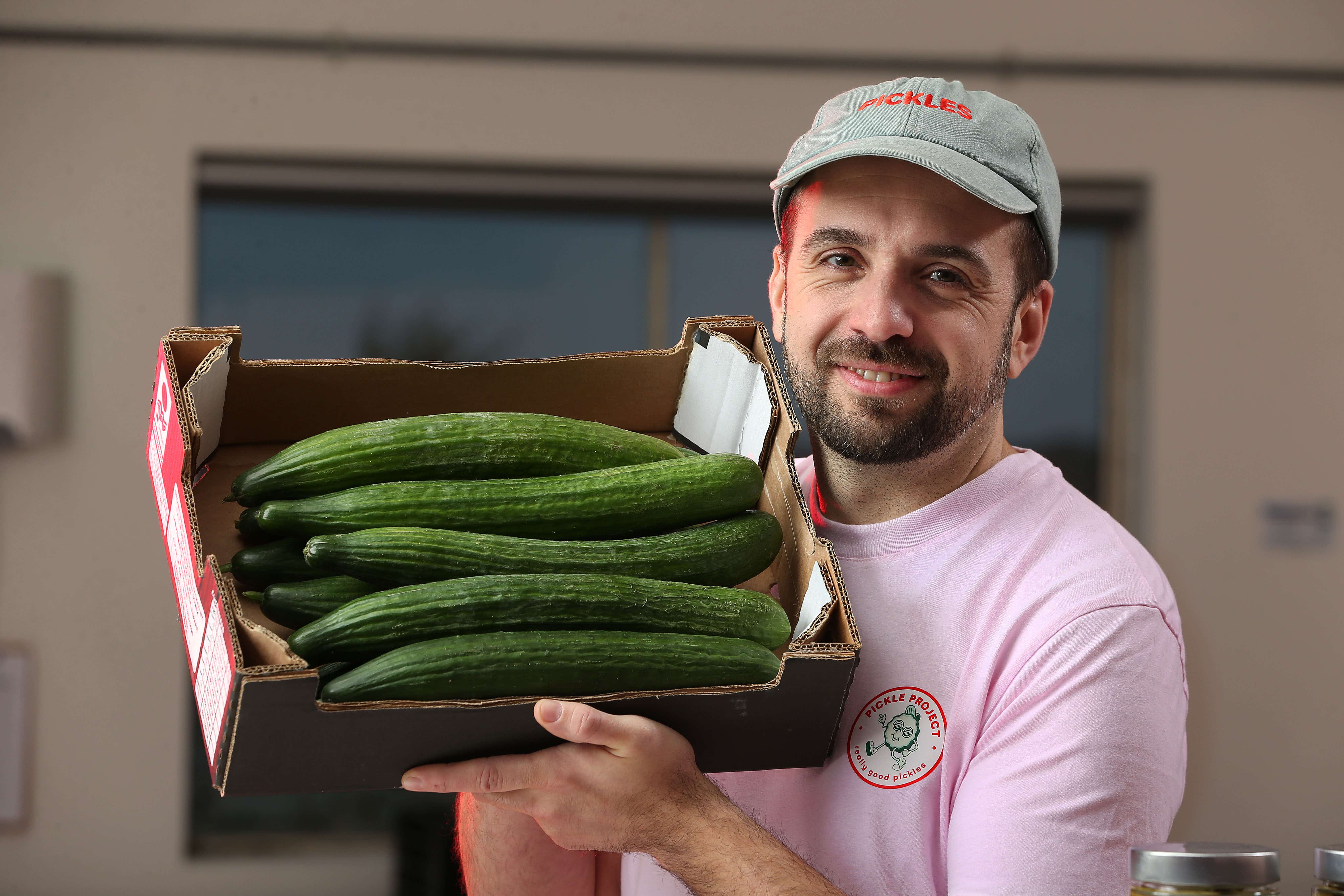
Business name: Pickle Project
Industry: Food
Founded in: 2023
Top business product: Business loan
Key learning: “Research, research, research. Learn everything you can about your chosen market.”
Matt Harris’ fascination with flavour and precision led him on an unusual journey from running Thunderbird, his chain of fried chicken restaurants, to launching Pickle Project, the UK’s first ultrasonic pickles.
Dissatisfied with the pickles available for his menus, he turned to science and experimentation to craft something that was crunchier, clearer, and more intensely flavoured than anything on the market.
Here’s how Matt is using ingenuity, persistence, and a dash of engineering creativity to redefine pickling in the UK.
How did Pickle Project get started?
Pickle Project was born out of frustration. Despite obsessing over every element of the food we served, I couldn’t find a pickle that I believed was up to scratch. Everything available was too sweet, too soft or too one-dimensional. To solve the problem, I turned to science.
I’m fascinated with how things work, which stems from my younger years and an early career in motorsport. During the creation of Pickle Project, I was inspired by watching cocktail bartenders use ultrasound to rapidly infuse spirits. Realising the same technique could be applied to food, I bought an ultrasound generator and began experimenting at home.
Those early trials led to the creation of the UK’s first ultrasonic pickles and ultimately, to the launch of Pickle Project.
How did your experience as a restaurateur influence Pickle Project?
Whilst developing menus, running my street food business and later Thunderbird, I analysed food in the same holistic way I once analysed racing cars. Every ingredient, texture and flavour needed to perform a specific role. I love to tweak recipes with an engineer’s mindset. Whilst experimenting, I realised we could make pickles that tasted more pickly than anything on the market.
What were the biggest challenges getting the business off the ground?
One of the big challenges was the astronomical cost of most manufacturing equipment, far beyond my means. Pretty much everything has been done manually so far, although we’re finally getting our hands on some second-hand equipment, which will introduce some automation.
The ultrasonic gear needed for the brine was especially challenging. It’s generally used on a very large scale for botanical extracts in fragrances. I ended up using an ultrasonic tank designed for cleaning car parts, pumping the brine using a petrol pump system I found on Amazon. Don’t worry, it’s all food safe and sanitary! We’ve had to be pretty creative and do a lot of Googling, but it’s working.
How does ultrasonic pickling work and why is it different?
Ultrasonic pickling uses ultrasound waves to create microscopic bubbles in liquid, a process known as cavitation. When these bubbles collapse, they release high-energy microbursts that shatter the flavour out of herbs and spices, forcing those flavours deeper into the cucumber.
Unlike traditional pickling, which relies mainly on time and diffusion, ultrasonic pickling extracts flavours that are not normally accessible. We researched the flavour compounds found in dill, such as limonene, phellandrene and D-carvone, and found spices to complement them – ten herbs and spices in total, some expected, but some unusual, like cardamom, mint and liquorice. The ultrasound allows us to extract flavours beautifully and clearly, even from unexpected ingredients.
What has been your greatest moment of pride since launching Pickle Project?
Securing a retail listing with Ocado was a major milestone, marking our entry into mainstream grocery. We’re now producing one tonne of pickles per week as consumer demand grows.
In addition, our Sweet Dill Pickle Chips receiving two stars at the Great Taste Awards 2025, so early in the brand’s journey, was significant validation of both the product and the innovative process behind it.
What financial products have supported the business so far?
We’ve taken a £25k loan via the British Business Bank Start Up Loan scheme, which has been really helpful. Beyond that, funding has come from loans from friends and family. We are aiming to bring some investors onboard in the coming months to fuel further growth.
What advice would you give to your past self starting the business?
On the one hand, I could have saved myself a lot of mistakes by buying or using the right stuff. On the other hand, it’s part of the learning process, and that’s something I really enjoy. I learn all my lessons the hard way, but that’s just being human.
What advice would you give to other food entrepreneurs innovating in a crowded market?
Research, research, research. Learn everything you can about your chosen market. I bought every pickle in the UK and many from abroad, collecting pictures, weights, measures, dietary information, company history and more. I scoured YouTube and social media for factory tours, taste tests and how-to guides.
The other thing is my mantra of ‘be everywhere, always’. Before I started in street food, I was at markets all the time. That made it much easier to get the business started. Similarly with Pickle Project, we went to the Speciality & Fine Food Fair and won the opportunity to pitch to Ocado. I actually hate networking, but you’ve got to be out there, meeting people and being seen, to make things happen.
How do you see Pickle Project evolving in the next few years?
The business is on track for growth, with exciting conversations with more retailers and new flavours being developed. We’re hoping to launch our new Spicy Chipotle Pickle Chips imminently. They use Mexican pecan-smoked chipotle chillis, and while you wouldn’t necessarily think smoky and pickly flavours would work together, the combination is brilliant. We can’t wait to see what the future brings!
This case study is for informational purposes only and is not intended as financial or professional advice. The results described are specific to the individual’s personal experience, so please consult with a qualified professional if you need financial advice.
About Joe Phelan
Joe is an experienced writer, journalist and editor. He has written for the BBC, National Geographic, and the Observer. As a business expert, his work frequently spotlights the ventures and achievements of small business owners. He writes a weekly insight article for money.co.uk, published every Tuesday.