Slow card machines may be costing UK SMEs thousands a year, money.co.uk survey finds

Written by Matt Browning, Content editor
19 May 2026
Nearly half of SMEs with card payment systems say slow card machines are losing them sales, with most losing over £2,500 a year, a money.co.uk survey found.
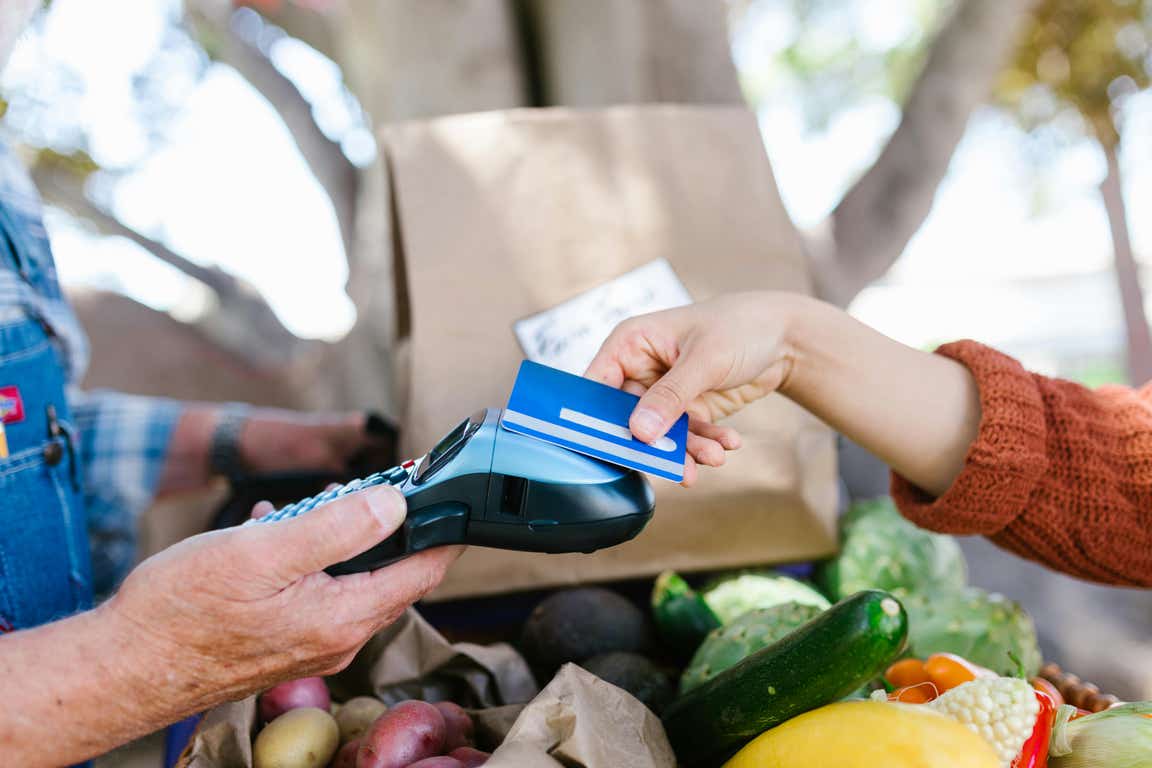
The UK retail and hospitality sector is at risk of losing £1.7bn due to payment system failures this year, a rise from £1.6bn in 2025.
Getting customers through the door can be tough enough for small businesses in 2026, with the cost-of-living crisis, online retailers and unpredictable weather taking their toll on steady footfall.
But even when customers reach the till, some sales are still slipping through the net.
A new survey by money.co.uk shows slow card machines could be costing SMEs thousands in lost revenue every year.
The survey of 500 UK SME business owners who use a card payment system found that almost half (46%) said they miss out on sales due to slow card machines. This could be due to cancelled sales at the till or customers heading to the door after waiting in long queues.
Of those who estimate they lose trade, 61% think they miss out on over £2,500 a year, while close to a third (31%) believe they’re missing out on at least £10,400 a year.
Meanwhile, almost one in 10 (8%) SMEs who estimate lost revenue due to slow card machines believe the issue causes around £20,800 in lost sales annually. That amount is similar to the salary of an employee working 35 hours a week on the National Living Wage.
In total, the UK retail and hospitality sector is at risk of losing £1.7bn due to payment system failures this year, a rise from £1.6bn in 2025, according to research from Retail Economics and FreedomPay.
Terminals can slow down for a variety of reasons, including weak Wi-Fi or signal, slow internet speed, or high traffic on the provider’s network. Operating in crowded areas at festivals, for instance, can also weaken the system's connectivity.
Therefore, it’s no surprise that reliability was one of the most selected factors SMEs consider when deciding on their payment system.
Over half (54%) of the SMEs in money.co.uk’s survey selected a strong Wi-Fi, Bluetooth, 4G or built-in SIM connection as a key factor when choosing a system.
The second most common reason, selected by half of respondents, was a device that accepts multiple payment options, including chip and PIN, Apple Pay, and other mobile wallets.
Cafes and bars often need staff to take payments at the table, so a portable reader makes sense, though this can mean relying on Wi-Fi or 4G rather than a wired connection.
Where reliability matters most, a countertop reader plugged into Ethernet will nearly always give the steadiest service. Many businesses use a mix of both: countertop devices at the till for speed and consistency, and portable readers for table service or busy periods.
Barriers to switching
Elsewhere in the survey, respondents were asked how much they’ve saved or how much they anticipate they could save by switching providers.
One in four (27%) said they would expect to save or have already saved at least £1,200 a year, while one in six (16%) estimate the amount to be closer to £1,800 a year.
Despite the potential savings, several factors have prevented business owners from switching to a new provider.
According to research by fintech firm Mollie, in 2022, many small businesses were reluctant to switch providers due to concerns about disruption to trade, being locked into a contract with an early termination fee, and a lack of clarity about whether a new provider would actually save them money.
In November 2021, the Payment Systems Regulator (PSR) published its card-acquiring review following concerns about a lack of transparency on the fees small businesses pay to accept card payments. It also looked into the difficulty businesses face in comparing and switching card machine providers.
The regulator found that contracts for card payment system terminals can “prevent or discourage” small businesses from switching card acquirers, due to expensive early termination fees.
It also found that acquirers (the service that authorises card payments) were not always publishing their price structures and headline rates, which can make it harder for small businesses to compare costs.
In March 2026, the PSR said it would implement remedies to address the “weak” competition for scheme and processing fees this year, while improving transparency on fees for acquirers and retailers.
With SMEs already making hard decisions to scale back due to rising employment costs and increased business rates, the money.co.uk survey shows how choosing the right card machine could be one decision that saves a small business thousands of pounds each year.
About Matt Browning
Matt started his writing career in 2012 and has been a reporter on personal and business finance news for several years. He joined the money.co.uk team in December 2025 to assist owners of small businesses, from what to do before trading begins to securing the best finance products required once their idea is off the ground.
View Matt Browning's full biography here or learn more about our editorial policy