Meet Roy: the founder reinventing workspaces for the next generation of entrepreneurs

Roy Shaby founded Tradestars after struggling to find workspaces that suited modern operators. Today, his company provides studios, support and community-focused spaces for hundreds of growing brands.
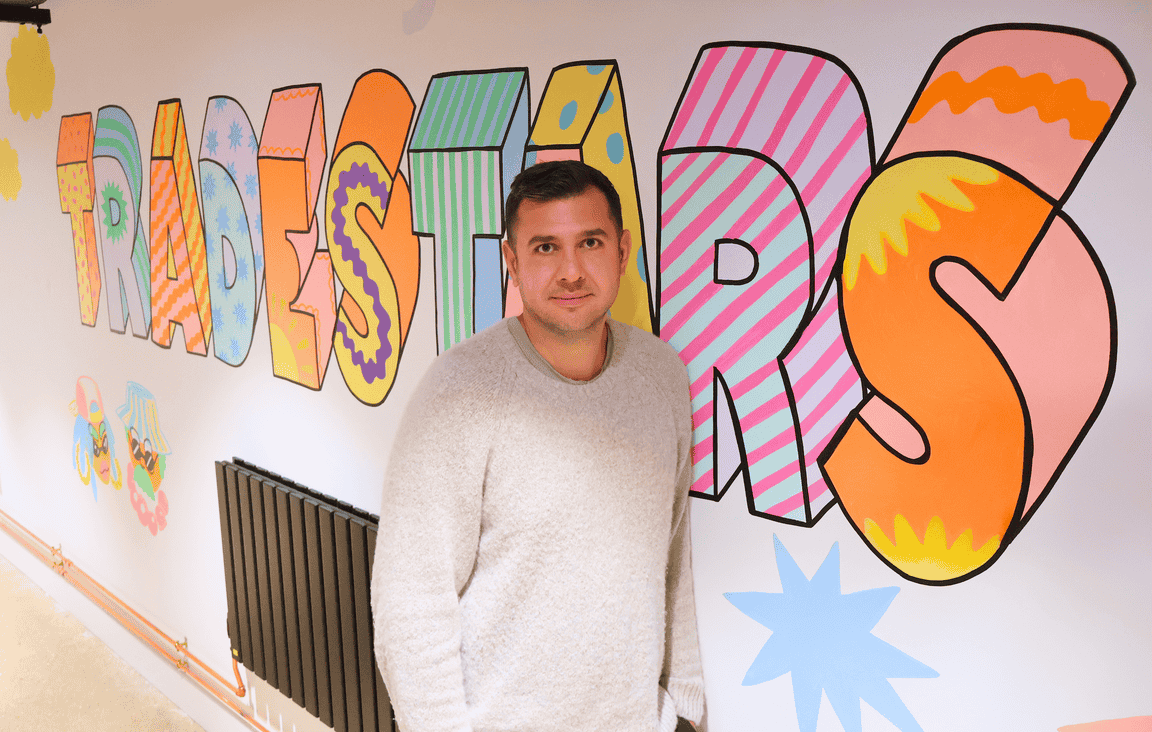
Roy grew Tradestars from one site into a network of founder-led spaces helping e-commerce brands, creators and service businesses start, run and scale.
Business name: Tradestars
Industry: Flexible workspaces
Founded in: 2023
Top business product: Business insurance
Key learning: “You have to adapt or you’ll get left behind.”
Most workspaces are designed with desk-based, nine-to-five teams in mind. But a growing number of modern businesses don’t fit that mould.
After running his own online food business and later scaling dark kitchens across London, Roy Shaby saw the problem first-hand. Finding space that merged storage, logistics and a professional base, without expensive long leases or unnecessary overheads, was surprisingly difficult.
So he built it himself.
Tradestars was created to give online-first businesses an offline home, combining flexible, design-led studios and built-in delivery handling, warehousing and community support.
Here’s how Roy turned personal experience into a new kind of workspace business.
What inspired you to start Tradestars, and what gap in the market were you aiming to fill?
I wanted to create founder-led spaces for operational businesses: businesses that need a physical base that’s good to work in, but also actually works for them. This could be an e-commerce or consumer brand selling online that needs a physical space, storage, and logistics support.
Or it could be service businesses that market online but deliver in person, such as hairdressers or tattoo artists, where social media presence matters more than footfall. There was no real home for those businesses. Tradestars was built to fill that gap.
If you had to give someone an elevator pitch for Tradestars, what would it be?
We offer the perfect offline space for online businesses. You can start, run and scale from here without constantly worrying about space, logistics or distractions.
With so many workspaces and logistics providers out there, how do you set Tradestars apart from the competition?
We’re built for the modern day entrepreneur. We offer digital-first, brand-led, operational spaces. That difference shows very quickly when people move in.
How did you design the spaces and services to meet the needs of today’s creators and innovators?
I’ve run operational businesses myself, starting with a bootstrapped online sushi takeaway and working up to a number of dark kitchens across London, so I have first-hand experience. I’ve also spent years speaking to thousands of founders across different industries. That gives you a very clear picture of what problems actually matter to them.
What have been the biggest challenges in running and scaling a business that combines workspaces, logistics and client support?
The first site was hard. Getting all the moving parts to work together took time. We’re now on our third building, and after every site we make sure we have a proper “lessons learned” session with the whole team. What worked? What didn’t? What needs to change? Entrepreneurs in our buildings told us what they needed, so we responded, which is why our Islington Tradestars now includes professional podcast and photography studios to support their creative and content needs.
We adapt constantly and we try to be better each time. We’re still learning and that won’t stop.
How do you foster a sense of community while still running the business efficiently?
Community isn’t a marketing layer for us, it’s built in. We do simple things like arranging coffee mornings and other events with drinks and music. We often introduce businesses to each other when we see potential for collaboration. We’re also working to create a more structured mentorship programme at the moment.
What lessons from your past roles did you bring into founding and growing Tradestars?
You have to adapt or you’ll get left behind. Always challenge how things are done, because if you accept the status quo, you’ll stop discovering better ways of doing things. Tradestars doesn’t follow the usual playbook, and that’s intentional.
What’s been your proudest moment or milestone so far?
Hearing members talk about their space as part of their business, not just where they work. That’s when it clicked that we are doing something right.
What financial products or services have supported Tradestars in its growth?
We’ve taken equity investment from the private equity house Clearbell, and a real estate debt facility from a family office. That combination made it possible to build a capital intensive property business properly.
We’ve also invested quite a bit in insurance policies that protect us against any out of the ordinary issues, and these have been invaluable. For instance, we have engineering insurance that comes with inspections provided by the insurance company, so if anything breaks then that policy should cover repairs or replacement. It’s one of the most important covers other than buildings insurance. People tend to overlook it, but things break, and in large properties it can be quite costly if you don’t have appropriate cover.
About Joe Phelan
Joe is an experienced writer, journalist and editor. He has written for the BBC, National Geographic, and the Observer. As a business expert, his work frequently spotlights the ventures and achievements of small business owners. He writes a weekly insight article for money.co.uk, published every Tuesday.
View Joe Phelan's full biography here or learn more about our editorial policy