Meet Yula: the founder bringing joy, community and song to choirs across Suffolk

From a single maternity leave project to seven thriving choirs, Yula Andrews has spent 15 years proving that music can unite, uplift and sustain a business.
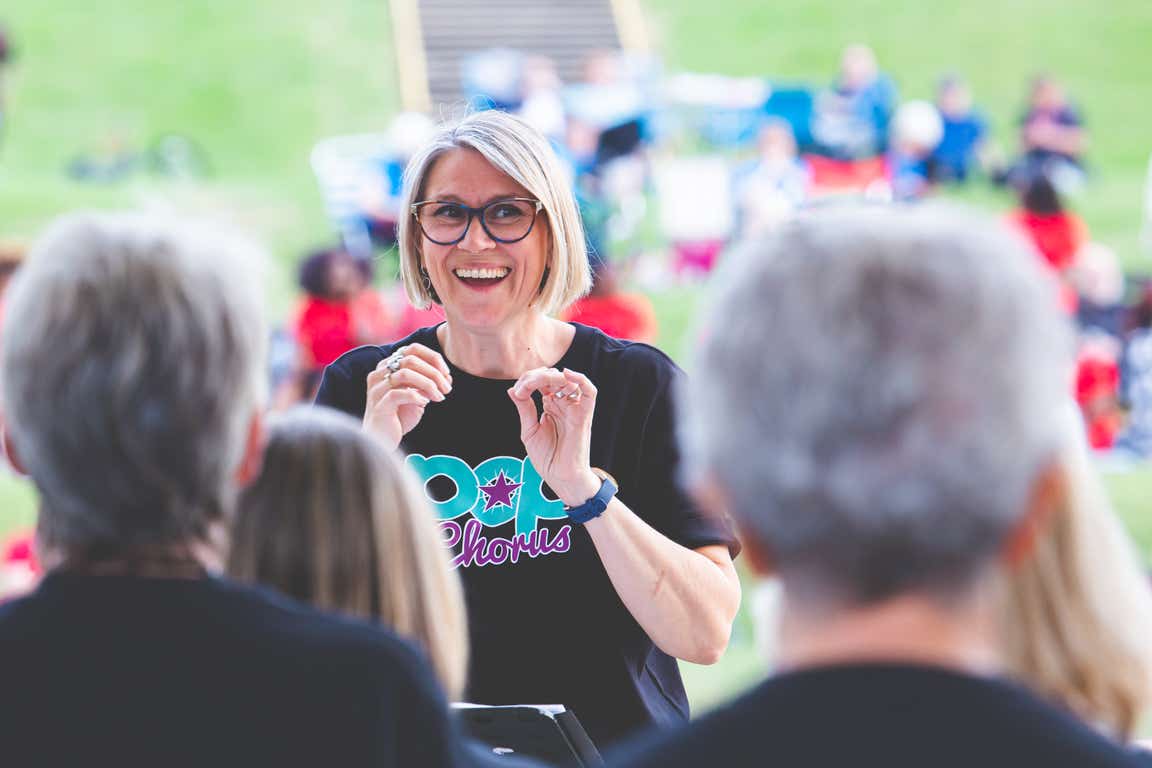
Yula Andrews turned a part-time project into Pop Chorus, a network of choirs that blends music, community and wellbeing.
Business name: Pop Chorus
Industry: Community singing
Founded in: 2012
Top business product: Business insurance
Key learning: “Members stay because they feel valued and truly part of the organisation.”
Yula Andrews has always loved singing. A classically-trained musician, she wanted a way to keep performing after moving to Suffolk and starting a family. What began as a small maternity leave project has grown into Pop Chorus, the “UK’s friendliest choir,” with seven thriving choirs across the county.
Through careful growth and a model designed to balance accessibility with financial sustainability, Pop Chorus has proven that a creative, purpose-driven business can be both resilient and impactful.
What inspired you to start Pop Chorus while on maternity leave? What did you want to do when you first launched it?
Singing has always been my passion. I’m classically-trained and obtained a first class music degree. I love the versatility of the voice and enjoy performing jazz, classical, pop, folk and even avant-garde music. I was still performing regularly with bands across the UK when I got married, but after moving from London to Suffolk and falling pregnant, gigging became far less practical.
I’d noticed the rise of contemporary choirs and community singing, and I knew how joyful it could be. I hoped it might also provide a bit of income while our first baby was very young.
How did you go from running one choir to building seven across Suffolk? What were the key decisions that made that growth possible?
I started out with a flyer in a shop window and was thrilled when eight singers turned up to a venue just two minutes’ walk from our front door. People told their friends, and the choir grew steadily.
Seeing the potential, we created a brand and website, chose key digital and print channels, and targeted locations ideal for new choirs. It was very hands-on: I coloured in roads on maps, hand-delivered flyers, and got choir members to help spread the word.
Our growth has been deliberate and organic, prioritising community and inclusivity above short-term financial targets.
Pop Chorus is often described as the “UK’s friendliest choir.” How have you built such a strong sense of community while still running it as a business?
We think about people first, getting to know our staff and members as individuals. This has guided everything from designing the initial session structure to creating a flexible subscription model that fits busy, unpredictable lives.
We’ve built an ethos our members genuinely embrace, shaping a welcoming space and the values we live by. For us, business success and caring for people go hand in hand.
We also have a great team, blending musical skill with the right personalities to keep our choirs friendly and welcoming. Members stay because they feel valued and truly part of the organisation.
Can you explain the business model behind Pop Chorus?
Pop Chorus is a subscription-based choir open to adults of all singing abilities. Members can try a session for free before committing to termly membership (three terms per year), paid by monthly direct debit. This gives the choir a solid, predictable membership base while remaining flexible for people who need breaks or extra financial support.
Uniquely, we offer a self-regulated concessionary rate and a Benevolent Fund, underwritten by members, to support those facing financial hardship. These measures reflect the choir’s strong community ethos and ensure singing remains accessible to everyone.
Beyond weekly sessions, the choir generates secondary income through workshops and add-on experiences, which also strengthen skills and relationships within the groups.
Alongside these core activities, we’ve launched a not-for-profit Community Interest Company (CIC) to grow wellbeing singing groups and community projects. The CIC also enables research into the benefits of singing for wellbeing, including a study exploring its potential role in managing menopause symptoms.
What have been some of the biggest challenges you’ve faced, both personally and professionally, while growing Pop Chorus over the past 15 years?
Covid was undoubtedly the biggest challenge. Almost overnight we went from singing weekly to not being allowed to meet, putting both the business and our choir community at risk.
Like many businesses, we adapted by moving sessions online via Zoom. Members could hear me and themselves but not each other, and at its peak a few hundred participants joined from across the world as choir members invited friends and family.
It was tough, but the continued support from our members helped us survive, and we’ve slowly rebuilt since. I believe the business’s resilience comes from the strong bond we share with members. It’s a symbiotic relationship exemplified by the mutual support we extended to one another throughout the pandemic.
What financial products or services have supported Pop Chorus over the years?
It’s very much a family business, so generally we’ve been pretty self-sufficient. As a member of the Independent Society of Musicians (ISM) we have access to insurance that’s tailored to our industry and our needs.
Our only loan has been a Bounce Back loan offered by the government through the Covid lockdowns. Our income inevitably dipped, so this definitely helped see us through. Even with community choirs, there are overheads that people might not appreciate – things like venue hire, music equipment, insurance, licensing, tech, marketing, music tracks and accountancy, to name just a few.
At what point did Pop Chorus feel like a viable long-term business rather than a side project, and what changed at that stage?
When we launched our second group I finally allowed myself to believe this could be a real business. Growing a single choir was one thing, but expanding proved the idea could work in other areas. That’s when we transitioned to a limited company, registered for VAT, and I brought on a supportive accountant, taking the first steps toward long-term, sustainable growth.
What has been your proudest moment (or moments) so far?
We’ve had so many magical moments, from opening the BBC Stage at Latitude Festival to hitting the singles charts. Last year, we staged six sold-out concerts across the county over two consecutive weekends, which was the culmination of a year in which our members raised £57,000 for local charities. To me, this perfectly captures the blend of business success and community spirit that has defined Pop Chorus from the start.
About Joe Phelan
Joe is an experienced writer, journalist and editor. He has written for the BBC, National Geographic, and the Observer. As a business expert, his work frequently spotlights the ventures and achievements of small business owners. He writes a weekly insight article for money.co.uk, published every Tuesday.
View Joe Phelan's full biography here or learn more about our editorial policy