Meet Mark: the founder behind a family-run collectibles business

After more than a decade selling model cars and collectibles, Mcslots turned a period of slowing sales into a new growth chapter, all while staying true to its family roots.
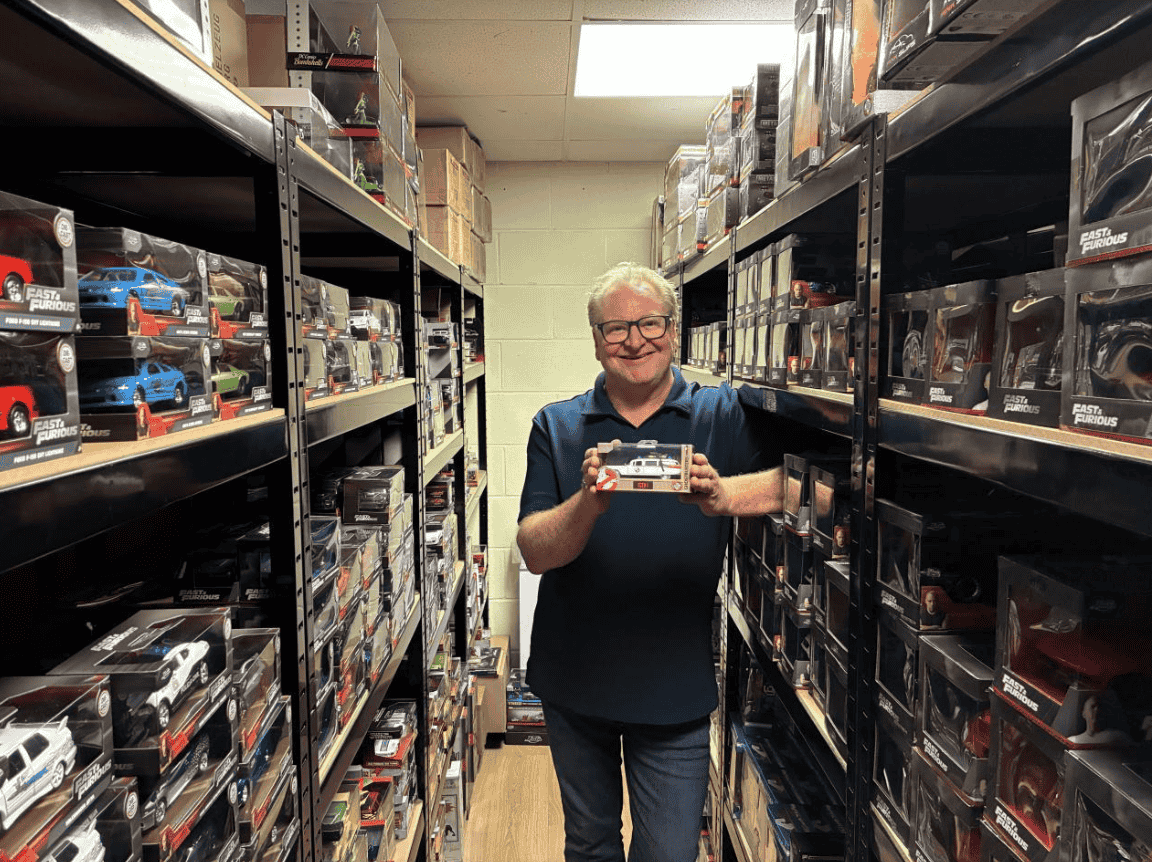
Mark Crowhurst runs Mcslots alongside his wife, Donna, and his daughters.
Business name: Mcslots
Industry: Retail/collectibles
Founded in: 2013
Top business product: Business loan
Key learning: “Joining Temu significantly shifted the trajectory of our business.”
For more than a decade, Mcslots has quietly built a loyal following among collectors of model cars, trains and pop culture memorabilia.
Run by Mark Crowhurst alongside his wife and daughters, the Cornwall-based business sells thousands of products to customers in the UK and overseas. But, like many retailers, Mcslots has had to navigate rising costs, shifting consumer behaviour and tightening household budgets.
When sales slowed across established platforms, Mark began looking for new ways to reach customers and keep the business moving forward, without losing what made it special in the first place.
How did Mcslots first get started? What inspired you to move from working in retail to running your own online toy business?
Twelve years ago, while working as a store manager at Asda, a colleague approached me with some second-hand Corgi model cars she wanted to sell. After I sold them on eBay at a profit, it gave me an idea to set up a small business, buying and selling model cars online. And, just like that, Mcslots was born.
Mcslots is a real family effort. How has working with your wife and daughters shaped the business over the years?
Running a family business alongside my wife, Donna, and daughters has been remarkably fulfilling. In the early days, my daughters would help by preparing cardboard boxes so my wife and I could pack orders after we got home from work, ready for the next day.
I still remember our first Christmas season. Donna and I stayed up until 2am preparing each order to make sure customers received them on time. Now that we’re all working full time, it’s incredibly rewarding to see our hard work pay off, with the business becoming our family’s primary source of income.
What do you think it is about model cars, trains and other collectibles that continues to capture people’s imaginations?
Our product range appeals to a wide variety of interests, from film and TV to train and car enthusiasts, making us a destination for many shoppers.
I think nostalgia plays a powerful role, with iconic shows and films continuing to drive sales of cars featured in classics like Mad Max. New movie releases spark fresh interest, inspiring fans to collect memorabilia from their favourite media, which in turn drives product development and sales.
Events like Comic Con also highlight this trend, bringing together people of all ages, especially younger audiences, to celebrate their passions and generate excitement within their community.
But, beyond film and TV fandoms, the miniature world of cars continues to captivate collectors, with many of them seeking replicas of vehicles they admire or personally own.
What made you decide to try selling on Temu, and what were your first impressions of the platform?
Linnworks, our central selling hub, enabled us to integrate with Temu, initially through its beta program. To our surprise, sales began within just 48 hours of listing products. Although we currently offer only 800 items on the platform, which is actually a small portion of our catalogue, Temu now accounts for 40% of our daily sales.
The experience has been overwhelmingly positive. Despite a few early-stage challenges, the support from Temu’s technical team and account managers has been exceptional.
Before joining Temu, what were some of the biggest challenges you faced?
With customers having less disposable income, we’ve seen a notable reduction in sales both domestically and internationally. Declining sales were evident across all the marketplaces we operate in.
In an effort to boost visibility, we invested in marketing, but with minimal ROI, the monthly expenditure was not justified. However, joining Temu significantly shifted the trajectory of our business.
How has selling on Temu changed the way you work with suppliers and plan stock?
We sell a product on Temu, the Ghostbusters Ecto, and at one point we wiped out the entire stock in the UK and Germany. I couldn’t get any more! We sold more on Temu in six weeks than we did in a year across other platforms. The volume has been massive, and I’ve got nothing but praise.
I’m already working with one of my suppliers in the EU specifically for Temu customers on certain products. These are exciting times, and I’m currently working with five suppliers for our main brands to supply Temu customers. We’re even considering going direct to factories, and I’m already in touch with some Chinese factories to meet the growing demand.
What financial products have helped support the business?
We used the Bounce Back Loan Scheme (BBLS), and have used working capital via PayPal and YouLend loans.
Looking ahead, what’s next for Mcslots?
I’ve got a massive range I can bring onto the [Temu] platform; I could see us listing around 3,000 items on there in the not-too-distant future. That’s going to be exciting.
About Joe Phelan
Joe is an experienced writer, journalist and editor. He has written for the BBC, National Geographic, and the Observer. As a business expert, his work frequently spotlights the ventures and achievements of small business owners. He writes a weekly insight article for money.co.uk, published every Tuesday.
View Joe Phelan's full biography here or learn more about our editorial policy