Meet Ken: the founder making 3D printing more accessible for businesses and makers

What began as a lockdown project in a garden shed has grown into an award-winning 3D printing business, helping organisations turn ideas into practical, production-ready parts.
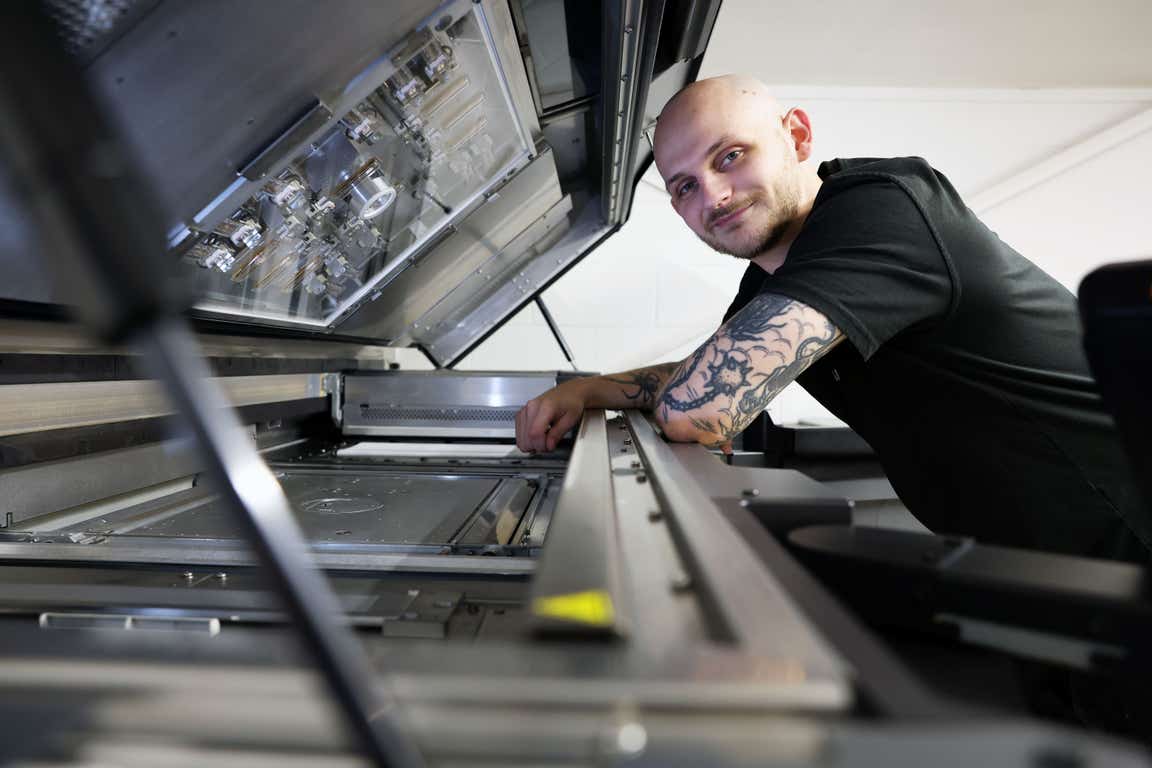
Lunia 3D works with startups, schools and large organisations on a wide range of 3D printing projects.
Business name: Lunia 3D
Industry: 3D printing
Founded in: 2020
Top business product: Business loan, business bank account and business insurance
Key learning: “Stay curious, ask for help early, and focus on building strong relationships.”
Ken Pearce co-founded Lunia 3D along with Yousef Ahmed during the first COVID lockdown, shortly after graduating in project design. While studying, he’d seen first-hand how powerful 3D printing could be, but also recognised that many organisations were unaware of how it could benefit them.
Starting out in a garden shed, Ken began producing parts for local makers and small businesses that suddenly needed fast, flexible manufacturing solutions. Just six months after its inception, Yousef joined the team, bringing fresh ideas and expertise that further accelerated the growth.
Since then, Lunia 3D has grown into an award-winning additive manufacturing business, working with everyone from start-ups and schools to major organisations, while staying focused on accessibility, education, and problem-solving.
How did Lunia 3D first get started, and what were you doing before launching the company?
Lunia 3D started during the first COVID lockdown in 2020. I’d just completed my studies in project design, graduating in May 2020. I used 3D printing extensively throughout my degree, but I saw how inaccessible the technology still felt to many people and businesses, despite its huge potential.
I began printing parts from a garden shed, initially supporting local makers and small businesses who suddenly needed rapid, flexible manufacturing. That combination of problem-solving, hands-on making and accessibility really sparked the idea for a business.
How did your interest in 3D printing evolve into a fully fledged business, and what sets Lunia apart in the industry?
What began as a practical tool during my studies quickly became a platform for helping others innovate. As demand grew, Lunia evolved into a full service 3D printing and additive manufacturing business. With my design background and Yousef’s mechanical engineering expertise, we had the complementary skills we needed to scale and grow.
What sets us apart is our focus on accessibility and guidance. We don’t just print parts: we help customers understand design, materials and processes so they get the right outcome, whether they’re a startup, a school or a large manufacturer.
How do customers typically find you, and which services or projects tend to excite them the most?
People usually find us through word of mouth, online search, and increasingly through social media and events. Projects that excite people most tend to be those where 3D printing solves a real problem quickly; think replacement parts, bespoke products, or components that would be difficult or expensive to create using traditional methods.
What have been your biggest challenges and proudest moments since starting the business?
One of the biggest challenges has been scaling at the right pace while maintaining quality and reliability.
The proudest moments have been seeing Lunia grow from a shed-based operation into an award-winning business, working with major organisations while still supporting individuals, startups, and community projects.
What are some of your most memorable projects or achievements so far, and how have they shaped the company’s growth?
Some of the most memorable projects include producing awards and exhibition pieces, collaborating with educational institutions, and supporting organisations with complex technical requirements.
A standout example was our work supporting autonomous vehicle prototyping, where 3D printing enabled rapid iteration of functional parts under tight development timelines. Projects like this really highlight the value of additive manufacturing beyond prototyping, and definitely helped shape Lunia’s focus on high quality, end-use components.
If you could go back to when you were first starting out, is there anything you’d do differently, or advice you’d give yourself?
I’d probably trust the process a little more and try not to feel the need to do everything all at once. My advice would be to stay curious, ask for help early, and focus on building strong relationships as much as building the product or service itself.
How did the British Business Bank Start Up Loan help you get Lunia 3D off the ground?
The Start Up Loan was absolutely crucial. It allowed us to invest early in reliable, commercial-grade 3D printers rather than relying on entry level machines.
That initial investment meant we could deliver consistent quality from the outset, which helped us build trust and secure repeat customers.
Aside from the Start Up Loan, have any other financial products helped support the business?
Yes, having the right business bank accounts, insurance cover, and access to credit facilities has been important as we scaled. These tools have helped smooth cashflow, protect the business, and give us confidence to invest in new equipment and opportunities.
What’s next for Lunia 3D, and what advice would you give to someone launching a tech-driven start-up?
The next step is continued growth, with a strong focus on our recent investment into Multi Jet Fusion printing. This is allowing us to scale production of robust, end-use parts and make high quality manufactured products more accessible to people and businesses that need reliable, production ready components.
For anyone launching a tech-driven startup, my advice would be to focus on solving real problems, stay adaptable, and don’t be afraid to start small and learn as you go.
About Joe Phelan
Joe is an experienced writer, journalist and editor. He has written for the BBC, National Geographic, and the Observer. As a business expert, his work frequently spotlights the ventures and achievements of small business owners. He writes a weekly insight article for money.co.uk, published every Tuesday.
View Joe Phelan's full biography here or learn more about our editorial policy