Meet Natalie and Matthew: the eyewear entrepreneurs championing British creativity through handcrafted spectacles

The House of Spectacles is redefining how people feel in their glasses, combining design, craft, and a made-in-London ethos to deliver the perfect fit.
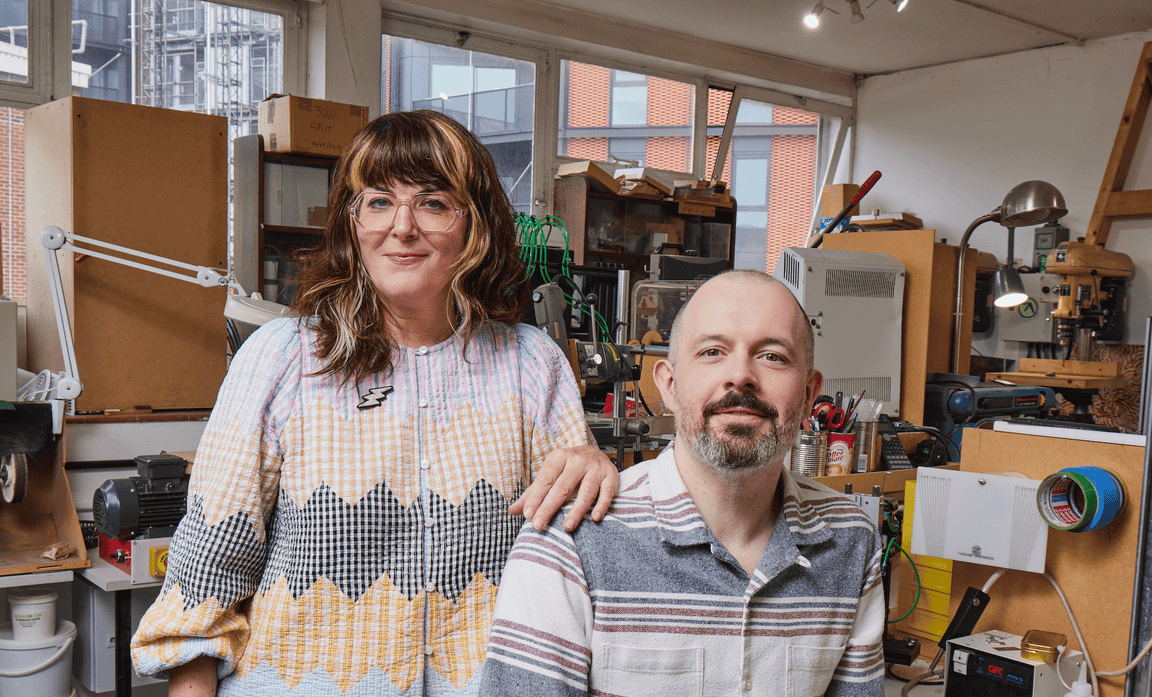
Partners in life and business, Natalie and Matthew have spent years perfecting the art of eyewear that truly fits.
Business name: The House of Spectacles
Industry: Eyewear
Founded in: 2016
Top business product: Business credit card
Key learning: “Test as you go. Don’t just fall in love with an idea and rush into production. Put your designs out there, get feedback, and see how people actually respond.”
Natalie Edwards and Matthew Lambert founded The House of Spectacles to address a widespread eyewear issue – most glasses simply don’t fit properly.
Frustrated by mass-produced frames and the decline of UK manufacturing, the pair opened a shop and gradually built a London workshop where every frame is designed and crafted by hand.
Years of refining the craft, testing designs, and learning from customers have allowed them to create eyewear that truly empowers people to feel confident and comfortable.
Here, Natalie explains how they have turned a vision into reality.
How did The House of Spectacles first come to life?
I started my first shop, Worshipful Spectacles, after 20 years in the optical industry, still struggling to find glasses that actually fit. Even with access to the world’s supply as a buyer, nothing felt right. I was also frustrated that glasses were no longer being made in England. I opened a shop selling vintage and new frames, but my real goal was to bring spectacle-making back here.
A year in, I met Matthew, who’s now both my life and business partner. He was a bespoke furniture maker, and when we realised eyewear-making was on the red list of endangered crafts, we decided to go into business together. Matt learned how to make frames while I focused on design and customers. We started small, at an accessible price point, building the craft and putting in the hours.
What problem are you trying to solve for customers?
The optical industry is, frankly, broken. One company controls around 80% of the global market, so frames are mass-produced in the Far East, usually in a single size. Buying glasses can feel like going into a shop for trousers and being told they only come in size 10, except it is even more complex, because it must suit both your head and your bridge.
Many people think they ‘don’t suit glasses’ or that their face is the problem. In reality, the industry simply isn’t set up for proper sizing. That’s what we’re changing.
Every style comes in 42 size combinations, made-to-order, so customers can finally find glasses that truly fit. The reaction when it happens is incredible – they realise it was never their face that was wrong, it was the system.
What has the journey been like from concept to business?
I’d say we’re still on the road to being a fully-fledged business. What we do is incredibly complex — every face is different, with variations in bridges, ear positions, angles, and proportions — so it’s taken years to refine both the craft and the process.
Matt and I started working together in 2018, learning side by side: he was mastering frame-making, and I was focusing on customers and design. A turning point came during Covid, when I realised that while bespoke has its place, people also want choice. They want different styles and colours, just like any other shopping experience. That pushed us to create collections with multiple sizes, which took a huge amount of testing and refining.
It’s been slower than we imagined, but I think of it like Chinese cooking – lots of prep work before the quick part at the end. We’ve done the groundwork, and now we’re ready to grow.
What are the biggest challenges and rewards of working this way?
The reward is in the craft itself. I really believe some people are made to make things, and it feels meaningful to be keeping that alive, not just for myself, but with the hope of growing a larger workshop one day and creating more craft jobs here in England. There’s something special about knowing every frame was truly made by hand.
The major challenge, though, is — unsurprisingly — cost. Mass production has set price expectations that we simply can’t match when making glasses in London, given the local rents and wages. However, we’re adamant that we don’t want to be a brand only for the 1% – our aim is to make beautifully crafted glasses as accessible as possible.
To get there, we have to grow the industry here, so that more makers, more production, and better economies of scale eventually bring prices down. That’s the long-term goal.
Tell us about your workspace and why it’s special.
Our workshop is in East London, in a space that’s been part of my life since I left art school in 2000. It started as an artist studio with friends, and for years it was my painting studio. When I opened the shop and later met Matt, it naturally evolved into the place where we began making our own glasses.
It’s a beautiful space, close to both our home and the shop, and we’ve been lucky to hold onto it as rents in London have skyrocketed. There aren’t many spaces like it left where small businesses can start and grow, so it feels very special. It’s not just where we work, it’s ingrained in our story.
What financial tools have helped you along the way?
We’ve been quite cautious with finance, because we knew it would take time to really master the craft and build confidence before taking on anything big. So far we’ve used smaller tools, like a small iZettle business loan that repaid itself through shop sales, a Capital on Tap business credit card, and some support from family to bridge early stages. That approach got us through the learning years, but now we’re at the point where proper funding is needed to take the business to the next level.
What advice would you give to someone wanting to build a design-led business?
Test as you go. Don’t just fall in love with an idea and rush into production. Put your designs out there, get feedback, and see how people actually respond. That process tells you what really works and gives you the foundation to grow. Everyone’s access to finance and support is different, but whatever your situation, the most important thing is to truly know your product and let real people’s reactions guide you.
What’s next for The House of Spectacles?
The next step for us is really about expanding our collection. We’ve moved from the shop into the workshop for now so we can focus on designing and developing more frames, building the depth we need for the business to grow. After that, the goal is to open a new space that combines a shop, workshop, and design studio all under one roof. That would become the true heart of what we do.
Once we’ve built a strong customer base and shown how much this approach is needed, the possibilities are wide open – from growing in London to opening shops around the world, all while solving fit problems and helping people feel amazing in their glasses.
About Joe Phelan
Joe is an experienced writer, journalist and editor. He has written for the BBC, National Geographic, and the Observer. As a business expert, his work frequently spotlights the ventures and achievements of small business owners. He writes a weekly insight article for money.co.uk, published every Tuesday.
View Joe Phelan's full biography here or learn more about our editorial policy