Meet Nisha: the eco-conscious entrepreneur bringing the greengrocer to your doorstep

Nisha Ravat founded Green Tomato to make sustainable shopping more convenient, using a vintage electric milk float to deliver package-free fruit and vegetables.
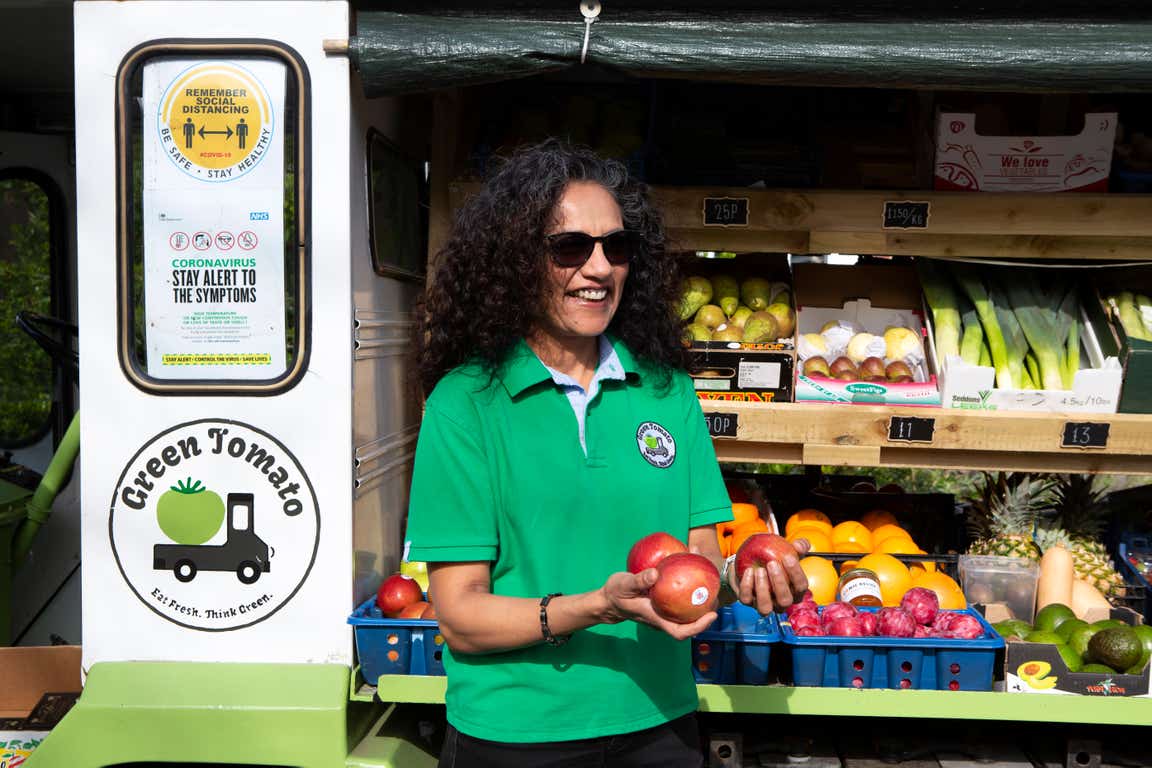
Nisha launched Green Tomato to make it easier for people to shop locally, reduce waste, and lower their carbon footprint.
Business name: Green Tomato
Industry: Sustainable food retail
Founded in: 2020
Top business product: Business loan
Key learning: “There’s a huge amount of support available for small businesses, and you don’t have to figure everything out alone.”
What if your local greengrocer came to you, rather than the other way around?
That's the idea behind Green Tomato, a mobile fruit and vegetable business that brings fresh, locally sourced produce directly to people’s doors using a restored 1981 electric milk float.
By encouraging customers to shop package-free and buy only what they need, the business aims to reduce plastic waste, cut unnecessary car journeys and tackle food waste at the same time.
Green Tomato has grown from a lockdown startup into a carbon-negative business that’s a familiar sight across Leicestershire. Along the way, it has expanded beyond doorstep deliveries with initiatives such as a healthy school tuck shop, while continuing to prove that sustainability and commercial success can go hand in hand.
We spoke to Nisha about the inspiration behind Green Tomato, the challenges of building a purpose-led business, and why making sustainable choices easier can benefit both people and the planet.
What encouraged you to start your business?
I launched Green Tomato in response to the undeniable impact of human activity on the environment. I was frustrated by the lack of action to change our behaviour, and wanted to find a way to make sustainable living easier rather than more difficult.
The inspiration came from India, where the carbon footprint per capita is around a third of that in the West. One of the things that really stood out to me was how people buy fresh produce daily from roadside sellers. There’s no packaging, no giant supermarket supply chains, and very little waste. Fresh, local produce is bought on the day it’s cooked.
That got me thinking: what if I brought the greengrocer to people’s doorsteps? Maybe we could reduce unnecessary journeys to the supermarket, cut emissions, minimise food waste and use less plastic packaging. And maybe, just maybe, small local actions could add up to something meaningful.
That’s how Green Tomato started. Not as a grand business plan or an environmental campaign, but as an idea rooted in community, convenience and common sense.
Now in our sixth year, we’ve been humbled by the support of our local community. Our sustainability values struck a chord, particularly during and directly after the COVID lockdowns, when people became more aware of their environmental impact.
Alongside running Green Tomato, I also continue to teach full-time at a busy comprehensive school, and I feel fortunate to be able to do both.
Why build a business around sustainability, nutrition and community?
We cannot solve modern environmental challenges through rigid thinking. Sustainability is not one-size-fits-all: we need practical, creative and local solutions that work in everyday life. Sometimes innovation is high-tech, but sometimes it’s as simple as rethinking how food reaches people.
Sustainability not only benefits the planet, but also helps build trust, loyalty and a more resilient business. By operating efficiently and ethically, we’ve created a business that is financially sustainable while building a community that genuinely values what we do.
Our customers are our greatest asset, providing a strong foundation for continued growth and long-term success.
What do you love most about what you do?
The most rewarding part of running Green Tomato has been building it from the ground up and seeing the difference it makes in people’s everyday lives. Our mobile shop offers a personal and nostalgic shopping experience that brings people together and encourages a stronger connection with their food and community.
I love seeing the response from our customers. They value the independence and community spirit that Green Tomato creates, and we’ve seen children become more enthusiastic about fruit and vegetables after visiting our float. What started as a simple idea has become a trusted part of local life, helping reduce isolation, strengthen community connections and make sustainable shopping feel enjoyable rather than difficult.
How have people responded to the milk float?
Our 1981 electric milk float, which is still in service today, has offset its original carbon footprint many times over. It’s quiet, emission-free and instantly recognisable, making it a real talking point wherever it goes.
For many people, it brings back fond memories, while for others it creates a sense of curiosity and excitement. Customers love the combination of nostalgia and sustainability: a familiar sight from the past being used to support a more environmentally conscious way of shopping today.
The float represents everything Green Tomato stands for: tradition meeting innovation, convenience meeting conscience, and local commerce bringing communities together.
What have been the biggest challenges and successes of running Green Tomato?
One of our proudest achievements has been launching Snackalicious, a healthy tuck shop at a local junior school. During its three-month pilot, 31% of pupils signed up, and children enjoyed more than 2,500 pieces of fruit.
Alongside our work with local charities, this initiative reflects our belief that sustainability is about more than reducing environmental impact; it’s also about supporting healthier, stronger communities.
Of course, it hasn’t always been easy. Early starts, long days and unpredictable weather are all part of running a mobile business, but the support from our customers and the positive impact we’re able to make make every challenge worthwhile.
If you were starting again, would you do anything differently? Is there any advice you would give your past self?
I wish I’d started sooner. For a long time I believed I couldn’t run a business without formal training, but I’ve since learned that isn’t true. There’s a huge amount of support available for small businesses, and you don’t have to figure everything out alone.
I’d encourage other founders to seek out that support, whether through organisations like the local Chamber of Commerce, university business schools, or programmes such as Help to Grow, which I highly recommend.
How did you finance your business?
We financed Green Tomato with a Bounce Back Loan during the 2020 COVID-19 lockdown. The initial setup was modest: an old milk float, shelves built by my husband, and artwork created by a local young artist.
We don’t spend on traditional marketing. Instead, we bring the shop directly to people’s doorsteps and let word of mouth do the rest. We have consistently reinvested our profits into improving the business, from upgrading payment systems and introducing digital stock management processes to purchasing new refrigeration units to support continued growth.
We bank with NatWest because they provide free bookkeeping software through FreeAgent. I found it very easy to use and made the most of their helpline in the early days, teaching myself how to stay on top of my finances. Now it’s a doddle!
What’s next for Green Tomato?
Our goal is to scale sustainably, expanding into neighbouring areas while staying true to the values that have shaped Green Tomato from the beginning. We want to support more local communities, build new partnerships, and help councils and families make more sustainable choices.
By showing that a business can benefit both people and the planet while remaining financially sustainable, we hope to inspire others to follow a similar path.
About Joe Phelan
Joe is an experienced writer, journalist and editor. He has written for the BBC, National Geographic, and the Observer. As a business expert, his work frequently spotlights the ventures and achievements of small business owners. He writes a weekly insight article for money.co.uk, published every Tuesday.
View Joe Phelan's full biography here or learn more about our editorial policy