Meet Martin: the founder on a mission to make plant-based eating tastier and more accessible

Launched in 2020, Grubby is a 100% plant-based recipe kit business helping people cook delicious, sustainable meals at home without the faff.
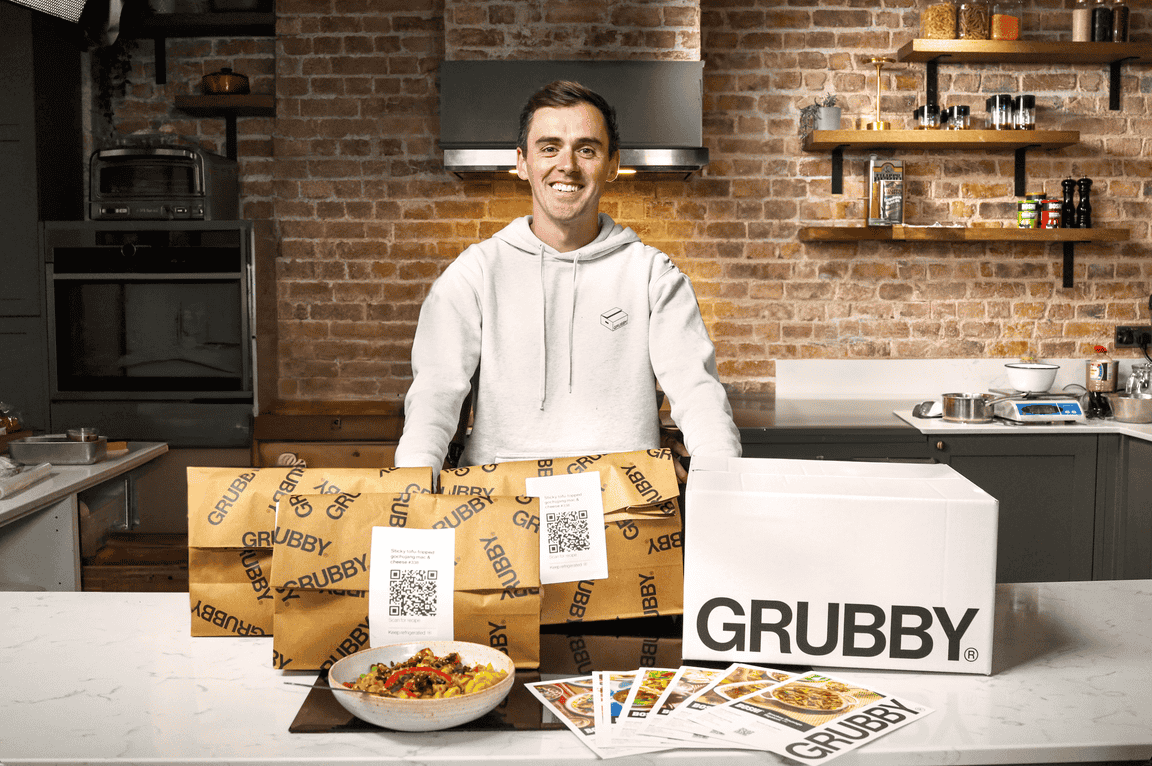
Grubby began as a B2B recipe kit service before pivoting to home delivery during the pandemic.
Business name: Grubby
Industry: Meal kits and ready meals
Founded in: 2020
Top business products: Business bank account and expense management software
Key learning: “Growth is great, but if it comes at the cost of quality or your values, you’re going to get stung.”
When Martin Holden-White launched Grubby in 2020, he saw an opportunity to offer an entirely plant-based alternative to the traditional meal kit for people trying to eat more veg, but accustomed to cooking with meat and dairy.
His ambition was to make cooking with plants more accessible, enjoyable and better for the planet. But when the pandemic sent everyone home, the business had to change direction almost overnight.
That early period is a world away from the business Grubby is today. Six years on, it has grown into a leading plant-based recipe kit subscription, with more than 3 million meals served to customers across the UK.
We spoke to Martin about the beginnings of Grubby, the challenges of turning a small operation into a growing food business, and what he’s learned about building a company without losing sight of what matters.
What problem were you trying to solve when you first started Grubby, and how has that mission evolved over time?
I started out as a chef at the age of 16, so I knew my way around a kitchen. But when I began cutting out meat, I found plant-based cooking faffy; it also felt like munching on rabbit food and a huge compromise on taste. It struck me that if I was struggling with meat-free meals, others must be too, so we set out to make plant-based eating a delicious default, rather than a lifestyle penalty.
Since 2020, that mission has evolved from two bikes armed with veg crates to delivering more than 3 million meals to over 250,000 customers nationwide and counting.
How did the pandemic change the direction of the business, and what were the biggest lessons you took from having to adapt so quickly?
We launched as an office delivery service just before everyone left the office, which wasn’t ideal timing! I’d moved back to my parents’ house with a business plan in tatters, so we had to pivot to home delivery with two bikes and some veg crates.
It was a crash course in supply chain and resilience. The biggest thing I took away from it all was to focus all your energy on taking care of your first customers, and never forget that the quality of the product is what really matters. Those early customers are the bedrock of your business.
Many of the people we personally delivered to and chatted with over those first few weeks and months are still loyal Grubby customers today, and I’m immensely proud of that.
What were some of the biggest challenges in the early stages of growing Grubby, and how did you overcome them?
Early on, it was all about logistics and managing cash flow. We were hand-packing boxes and once had to haul 150 cauliflowers in the back of a black cab when a supplier let us down. We were constantly on the edge of running out of cash.
We overcame it through some incredibly scrappy door-to-door selling, flyering with friends and family, and packing everything ourselves by hand, including spice blends with teaspoons, until we secured a £100,000 Innovate UK grant, followed by a successful crowdfunding round.
Those were the turning points that allowed us to build the professional fulfilment infrastructure and, ultimately, the business we have today.
As the business has grown, what have you found most difficult about scaling while staying true to your original values?
Growth is great, but if it comes at the cost of quality or your values, you’re going to get stung. We almost paid the ultimate price for this in the aftermath of raising several million pounds. It’s easy to get caught up in growth and lose sight of how to make the business mechanics and unit economics stack up. That’s when growing pains can start to unravel if you haven’t got your house in order.
We’ve kept our core team together since day one, which shouldn’t be underestimated either. I know a lot of founders who spend all their time hiring and firing, and it’s incredibly resource-intensive. Maintaining a positive working culture is hard to establish, but it’s worth fighting for because it pays back through your time, team productivity and work ethic.
Sustainability is built into many parts of Grubby. How do you approach making environmentally conscious decisions as a growing business?
Changing what’s on your plate is one of the most powerful things you can do for the planet, even more so than giving up flying or buying an electric car. Food systems drive a third of global emissions, so our approach is to make plant-based eating the “delicious default” and remove the barrier to making that change.
As a certified B Corp, we track everything. We were the first UK recipe kit to carbon-label every meal, and we give our customers a personalised foodprint tracker so they can see their real-world impact. So far, we’ve helped cook over 3 million meals, saving more than 5,000 tonnes of CO2e.
But we know people aren’t motivated by preaching. Instead, we use wit and bold flavours to lower the barrier to entry, showing that swapping just one meat meal a week can have a massive cumulative effect. Whether it’s sourcing from local growers or using minimal, recyclable packaging, every decision is about making progress feel rewarding, rather than restrictive.
We’re now moving beyond visibility, with plans to launch a rewards platform that turns climate action into tangible perks for our customers.
What financial products have supported you in growing and running the company?
I mean the basics, like Pleo for expenses and Stripe for payments, as well as getting a decent interest rate on our business accounts. We started with Metro Bank, who have been solid, but we now spread our money across different providers to reduce our risk as much as possible after the Silicon Valley Bank saga.
We’ve used a mix of traditional and community-led finance to fund the business. We started with angel investment and a crucial £100,000 Innovate UK grant from the Sustainable Innovation Fund at the time.
Since then, we’ve raised more than £6 million through VC backing and two major crowdfunding rounds. Crowdfunding was a game-changer; having more than 1,000 of our own customers as investors means our financial success is directly aligned with our community.
Looking back, is there anything you would approach differently if you were building the business again from scratch?
I think now, with AI, things would be extremely different. It’s kind of depressing to think about the things I used to spend my time on, like researching suppliers and building very basic processes and tech features over months and years, that would probably take weeks or days now.
That said, I’d definitely spend more energy early on making sure the business mechanics, unit economics and product quality were ready for scaling. I’d also probably hold off on raising money until it was absolutely necessary.
Investment is glamourised, but it adds a whole other layer of complexity. If you can achieve more without raising money, the business will probably be more resilient in the long run, although that’s much easier said than done.
What advice would you give to other founders trying to build a purpose-led food business in a competitive market?
Your product has to win on taste and convenience first. The purpose is important too, but people have got to love the product first and foremost if they’re going to keep coming back for more. If the food isn’t amazing and it isn’t convenient, the mission won’t save you.
Also, stay persistent. We nearly ran out of cash several times and fought a major trademark lawsuit. You need a niche you truly believe in to survive those incredibly stressful moments.
Build a team that’s bought into the why, and have fun while you’re building. Otherwise, people won’t stick around and you’ll become a recruitment manager rather than a founder building a business.
About Joe Phelan
Joe is an experienced writer, journalist and editor. He has written for the BBC, National Geographic, and the Observer. As a business expert, his work frequently spotlights the ventures and achievements of small business owners. He writes a weekly insight article for money.co.uk, published every Tuesday.
View Joe Phelan's full biography here (opens in a new tab) or learn more about our editorial policy (opens in a new tab)